Chapter 1 / 10 1 July 1898 – 1919
Budapest and Vienna
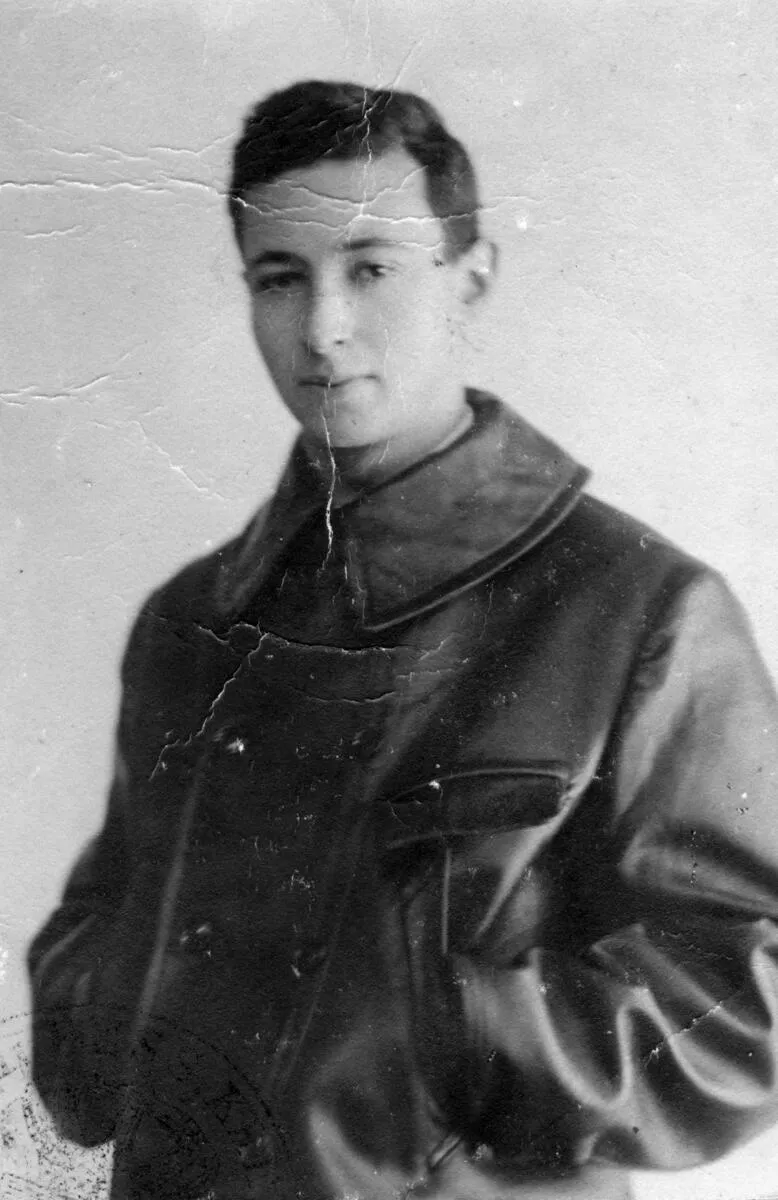
Josef Ganz is born in Budapest on 1 July 1898, the son of the journalist and writer Hugo Markus Ganz, and grows up in Vienna.
Engineer · journalist · pioneer of the people’s car
1898–1967
A life in ten chapters, from Budapest to St Kilda. Scroll to fly through it.
Josef Ganz is born in Budapest on 1 July 1898, the son of the journalist and writer Hugo Markus Ganz, and grows up in Vienna.
After the war Ganz studies mechanical engineering, first in Austria and from 1920 in Germany.
Lacking the money to build his car, Ganz writes about it. In 1928 he becomes editor-in-chief of Klein-Motor-Sport, which he renames Motor-Kritik in 1929.
In the summer of 1930 Ganz builds his first prototype at the motorcycle maker Ardie in Nuremberg, in May 1931 the Maikäfer at Adler in Frankfurt. Daimler-Benz and BMW hire him as a consultant.
In May 1933 the Gestapo arrests Ganz on fabricated charges of blackmailing the car industry. He is released after a month and can prove his innocence, but has to give up the editorship of Motor-Kritik.
Ganz settles in Switzerland in the summer of 1935. With the support of the federal authorities he develops a Swiss Volkswagen: three prototypes in 1937, a six-day test drive in 1938, a contract with Rapid for a pre-series.
Ganz moves to Paris in 1950. He has contacts in France: for the Julien company he had designed the small MM5 and MM7 in 1947–1949.
In Australia Ganz works for General Motors-Holden from 1955.
For decades the name Josef Ganz is missing from the story of the Volkswagen. In 1990 the Automobil Revue prints a two-part series on him.
In the book
This site shows facts and finds. The narrative, the people and the documents are in Paul Schilperoord’s biography.
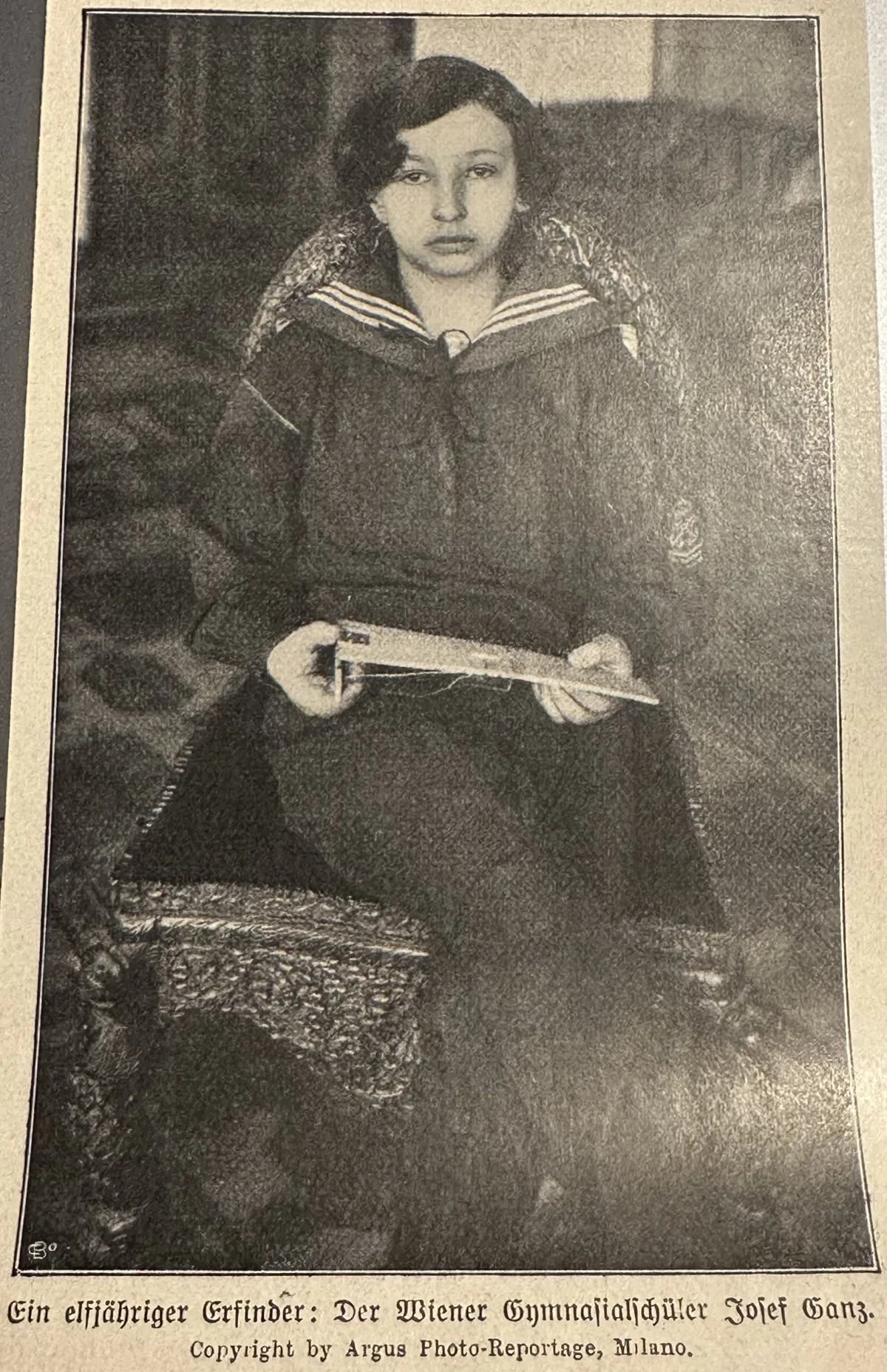
Start againJosef Ganz is born in Budapest on 1 July 1898, the son of the journalist and writer Hugo Markus Ganz, and grows up in Vienna. Technology fascinates him early: he is granted his first patent at the age of twelve. In the First World War he serves in the German navy.
His father, Dr Hugo Markus Ganz, came from Germany and wrote for the Frankfurter Zeitung and the Neue Zürcher Zeitung. Like his father, Josef would later work as a journalist.
Fascinated by technology from an early age, Josef Ganz is granted his first patent at the age of twelve.
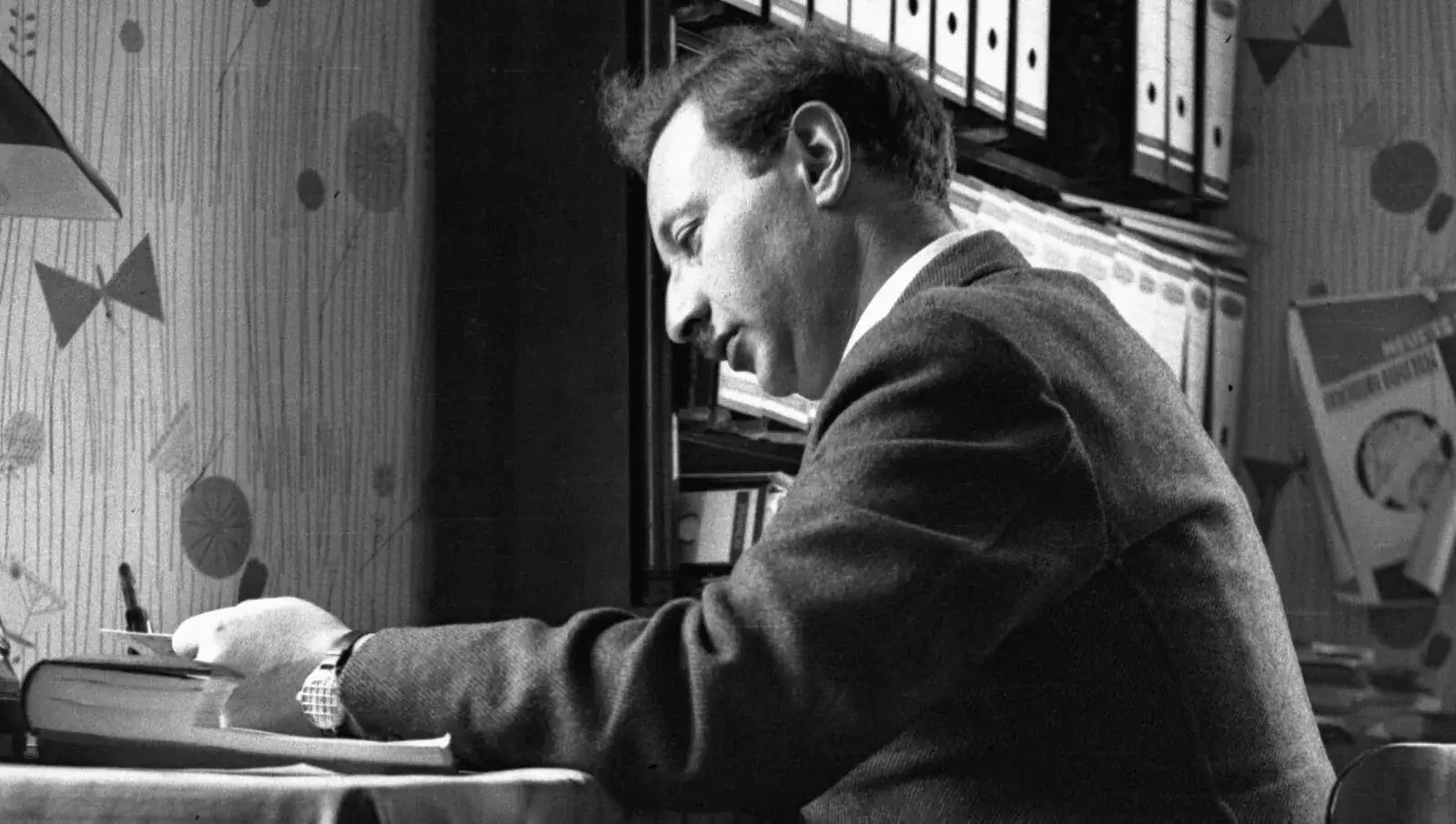
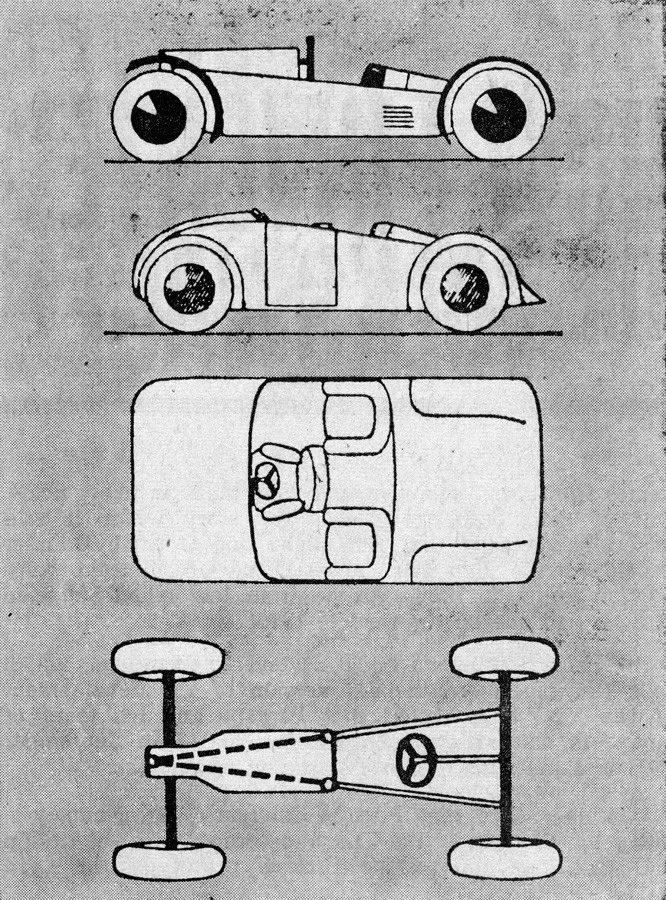
After the war Ganz studies mechanical engineering, first in Austria and from 1920 in Germany. As a student he wants to build a people's car for the price of a motorcycle: in 1923 he draws his first small car, the Ganz-Klein-Wagen. He graduates as Diplom-Ingenieur in 1927.
Ganz studies mechanical engineering, first in Vienna and from 1920 at Darmstadt in Germany, and graduates as Diplom-Ingenieur in 1927. The sources do not agree on the year of his diploma: the German embassy wrote 1927 in 1965, Metternich gives 1928, and the German Wikipedia article says October 1926 without a reference.
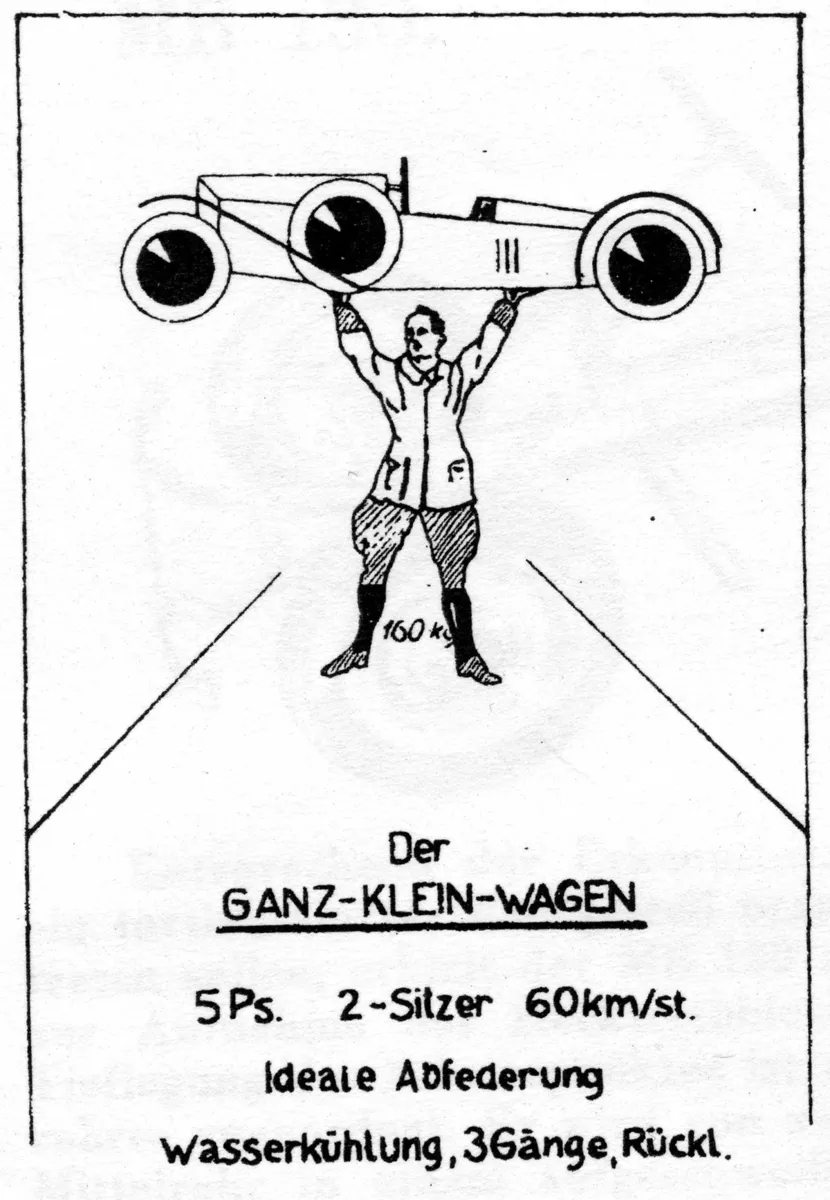
In 1923 Ganz makes his first sketches for a small, light two-seater: four wheels, a mid-mounted engine, independent suspension on all wheels and a streamlined body. The design is inspired by the Rumpler Tropfenwagen of 1921. A prospectus for the Ganz-Klein-Wagen survives.
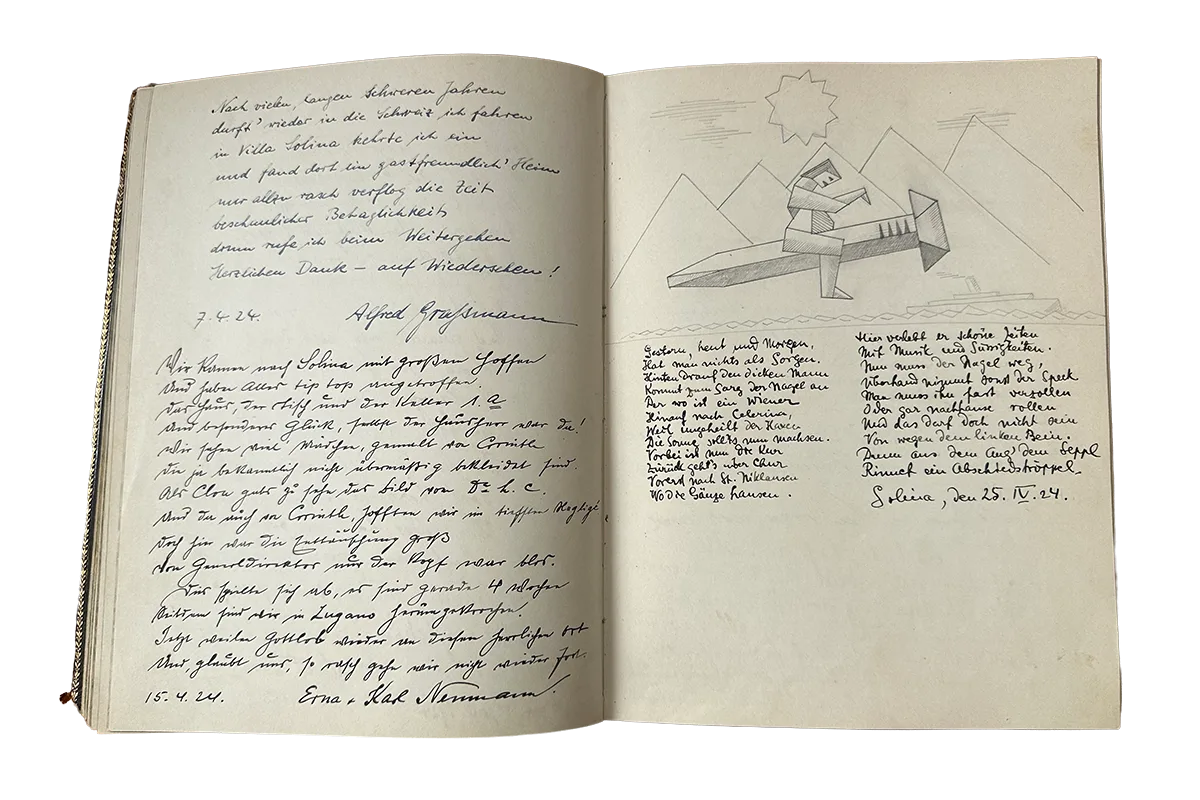
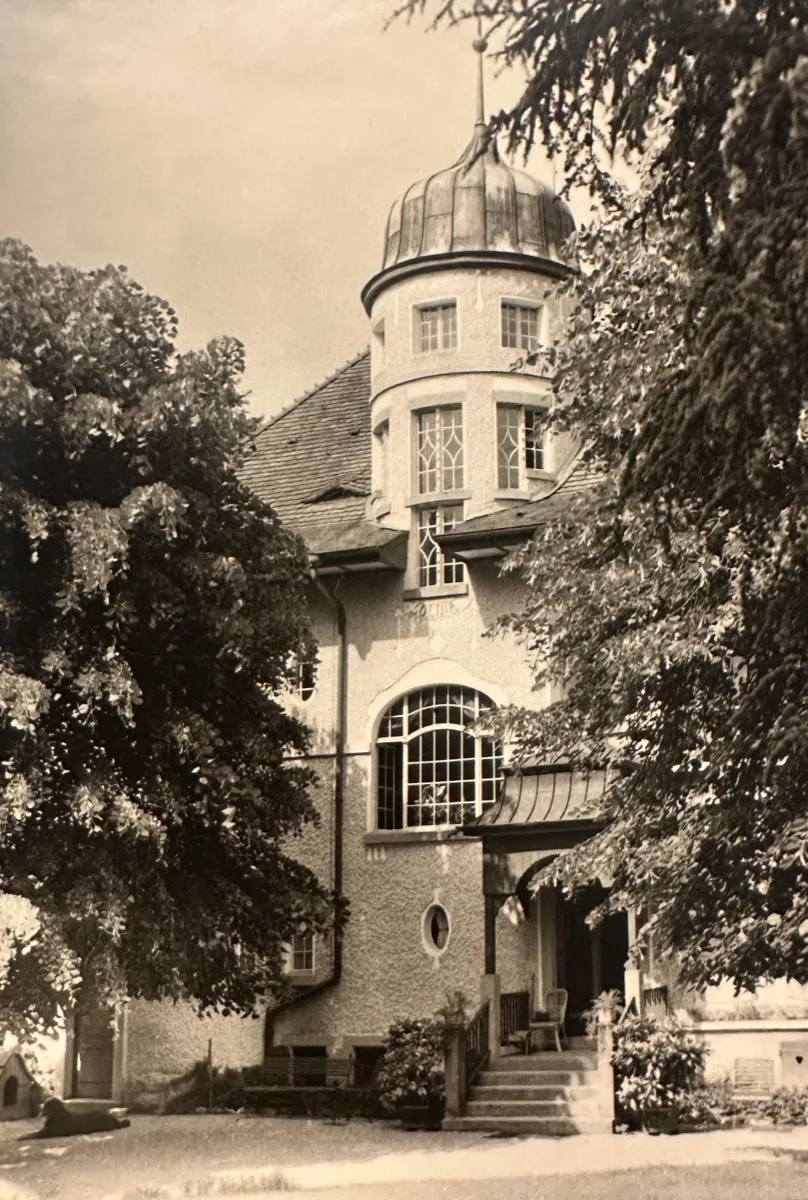
On 25 April 1924 Josef, called "Seppl" in the family, writes a humorous poem with a drawing into the guestbook of the Villa Solina in St. Niklausen near Lucerne, the home of his uncle Alfred Ganz since 1918. He has come from a cure for his leg in Celerina. His father Hugo had already spent the summer of 1919 recovering at the villa, which from 1939 sheltered relatives persecuted by the Nazi regime.
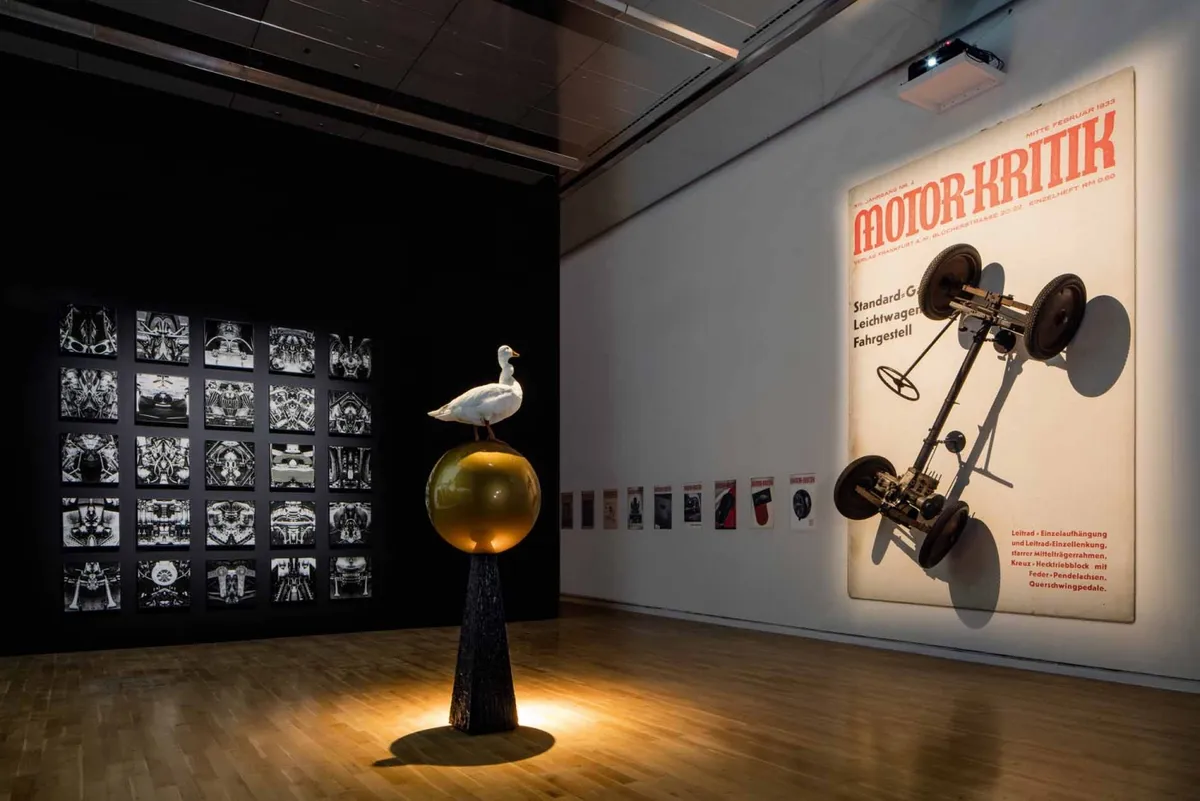
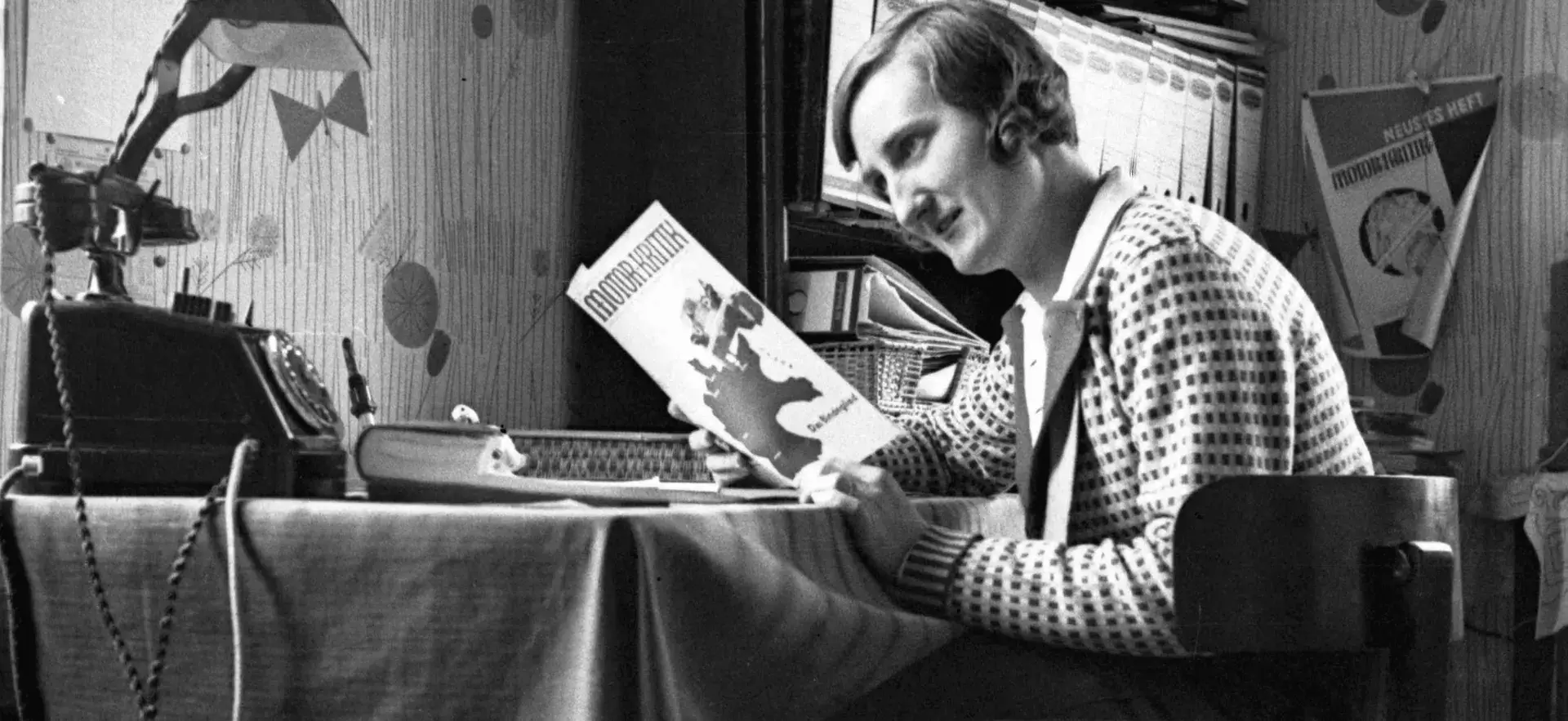
Lacking the money to build his car, Ganz writes about it. In 1928 he becomes editor-in-chief of Klein-Motor-Sport, which he renames Motor-Kritik in 1929. The magazine attacks outdated designs and corruption in the industry and the press, and campaigns for a German Volkswagen with a central tube, swing axles and a rear engine. The industry answers with lawsuits, slander and an advertising boycott.
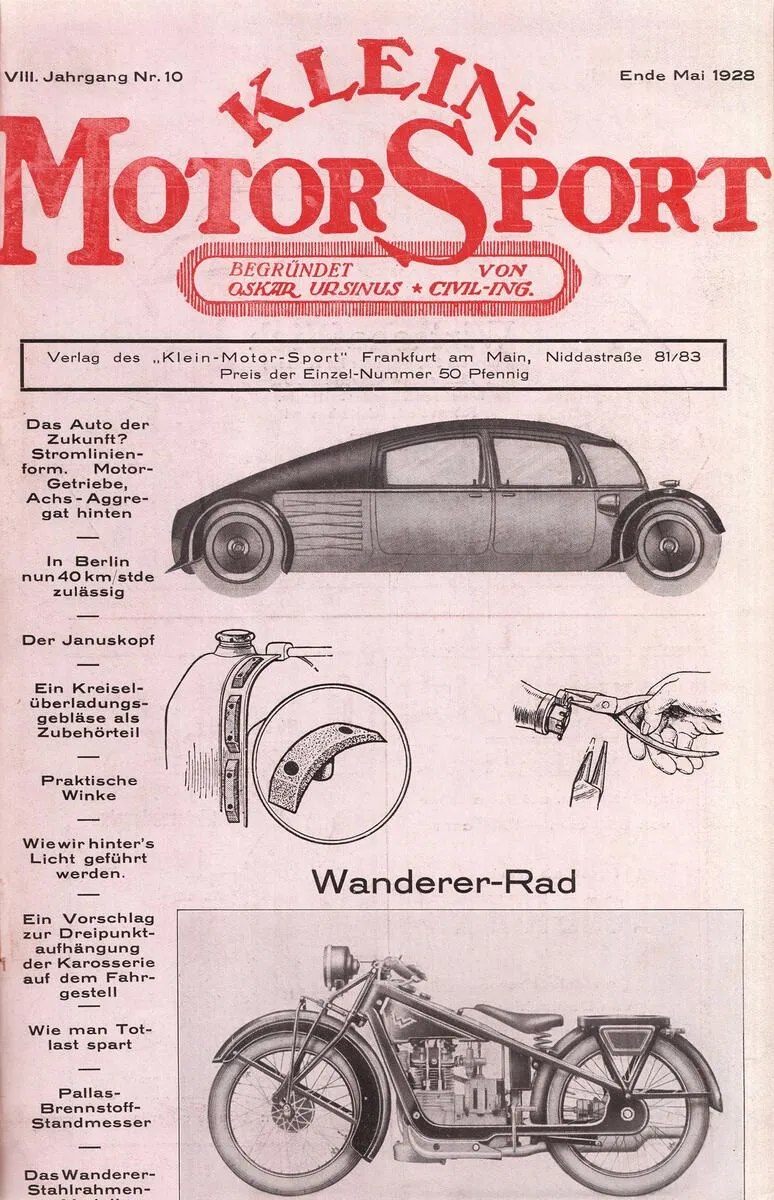
Shortly after his diploma Ganz takes over the small magazine Klein-Motor-Sport. Issue 10 of 1928 already shows "The Car of the Future" on its cover. In 1929 he renames the magazine Motor-Kritik. The biography page of josefganz.org gives 1927 for his appointment, the Motor-Kritik page and the 1965 embassy note 1928.
Motor-Kritik gives supportive but fierce criticism, fights corruption in the car industry and the trade press, and promotes new technology: light cars with a central tube frame, swing axles and a rear engine, the "Deutscher Volkswagen". Car makers respond with lawsuits, slander campaigns and an advertising boycott; every attack only increases the magazine's publicity.
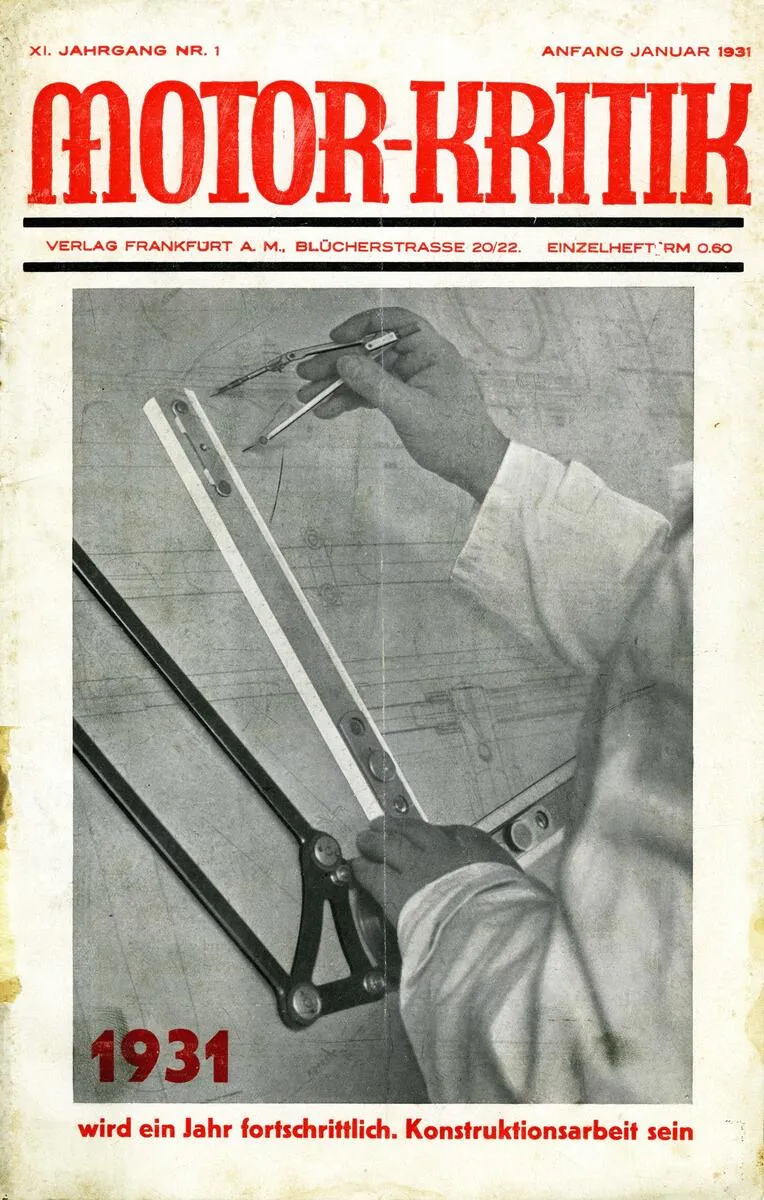
Ganz files a German patent application for a chassis with a rear central tube (DE 528 643). It is one of the patents on which the Standard Superior will later be built.
In August 1932 Motor-Kritik prints an article by the young engineer Béla Barényi (vol. 12, no. 15, pp. 348–353). The two men knew each other; Barényi later won a court case over the authorship of the Beetle's basic design.
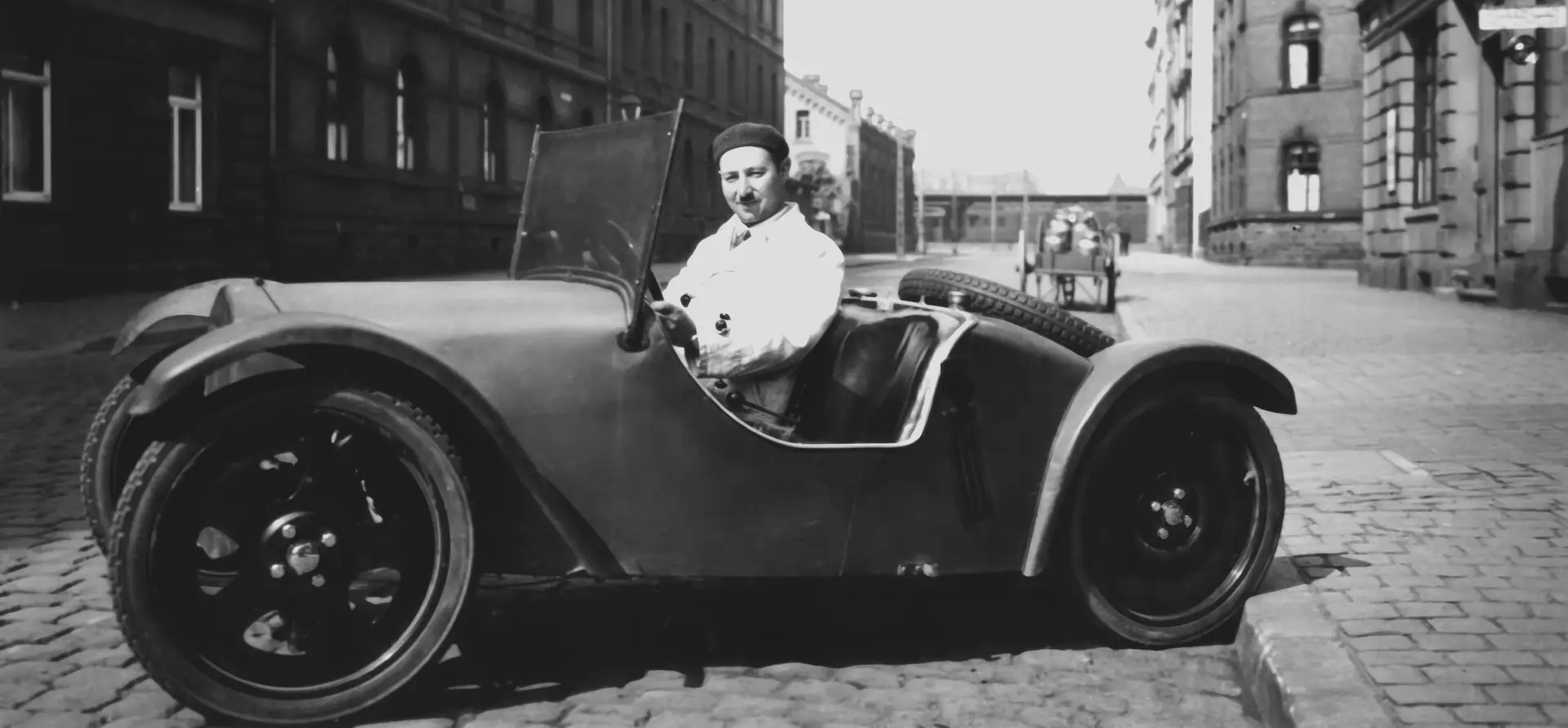
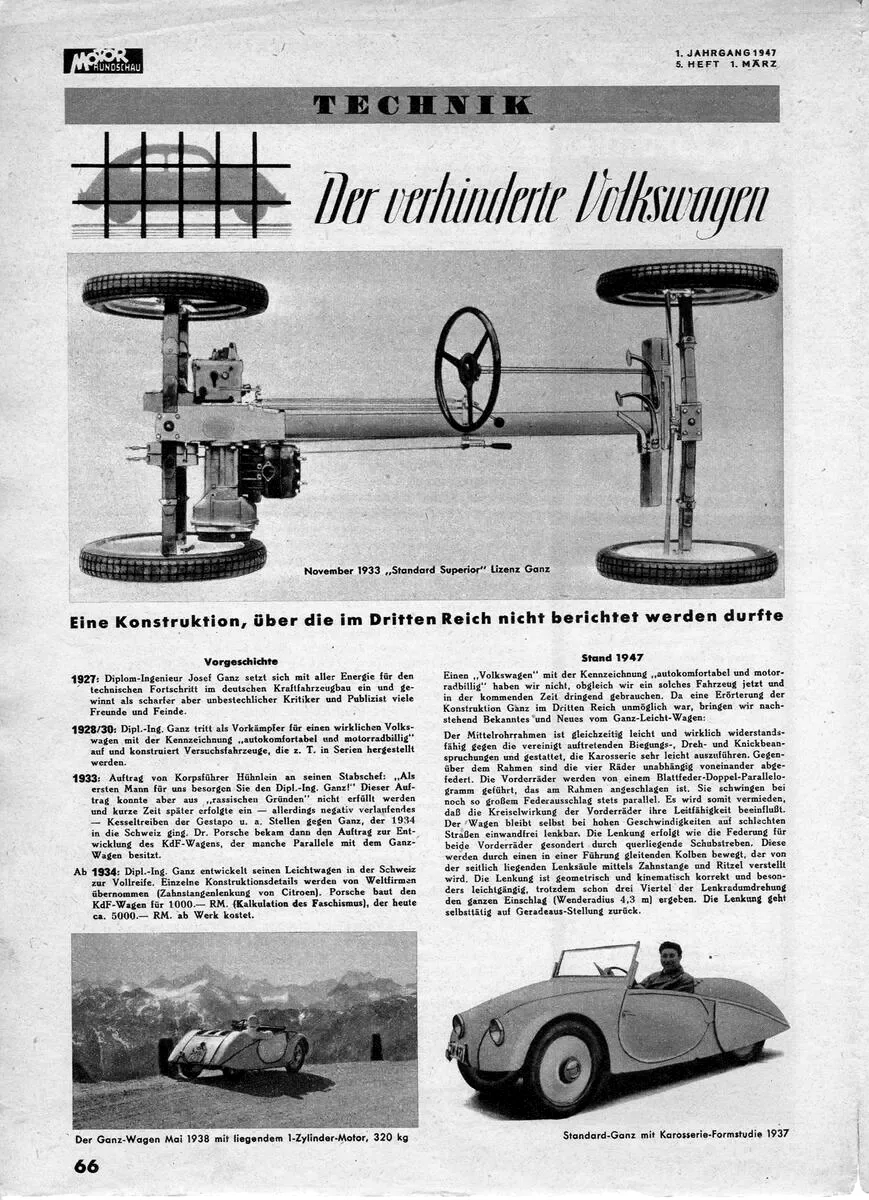
In the summer of 1930 Ganz builds his first prototype at the motorcycle maker Ardie in Nuremberg, in May 1931 the Maikäfer at Adler in Frankfurt. Daimler-Benz and BMW hire him as a consultant. In February 1933 the Standard Fahrzeugfabrik shows the Standard Superior, built on his patents, at the Berlin motor show: 1,590 Reichsmark.
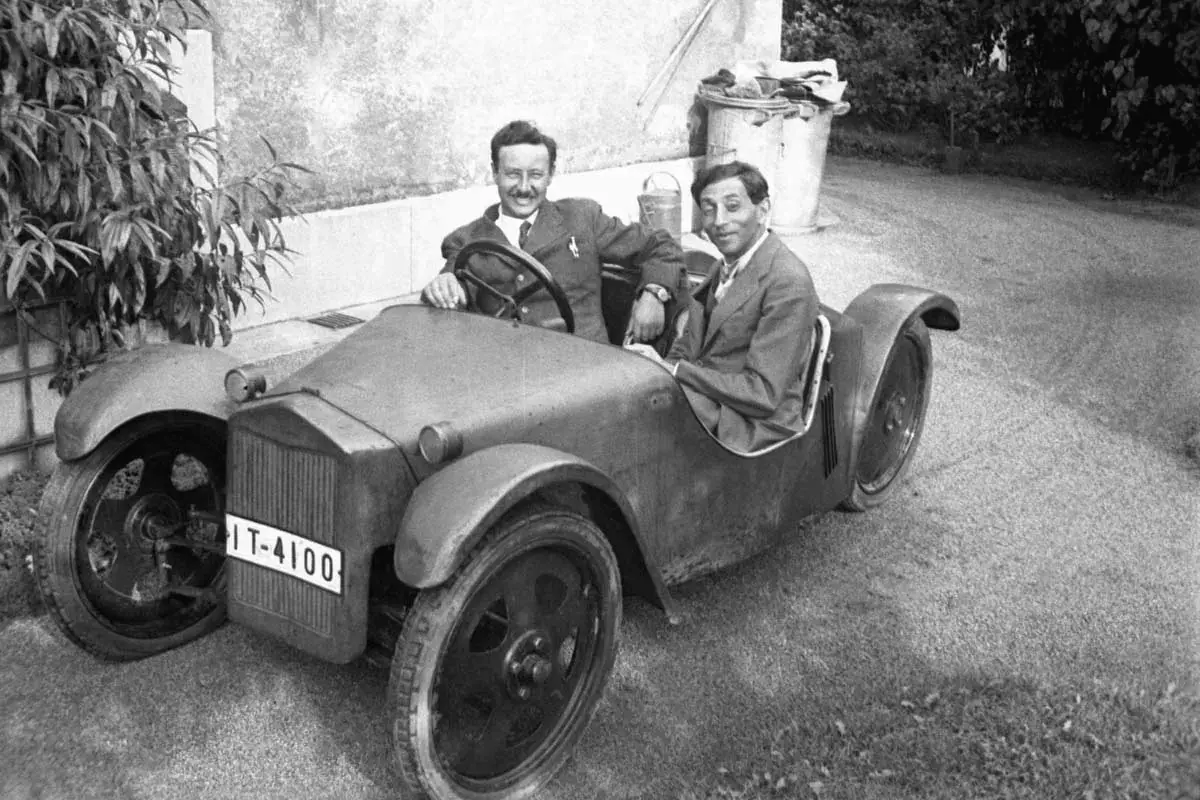
In the summer of 1930 Ganz builds a first prototype of his Volkswagen at the motorcycle manufacturer Ardie in Nuremberg: a central backbone chassis, independent suspension with swinging rear half-axles, a mid-mounted engine and a streamlined body. He had discussed a small car with Zündapp's director Fritz Neumeyer before, but built it at Ardie.
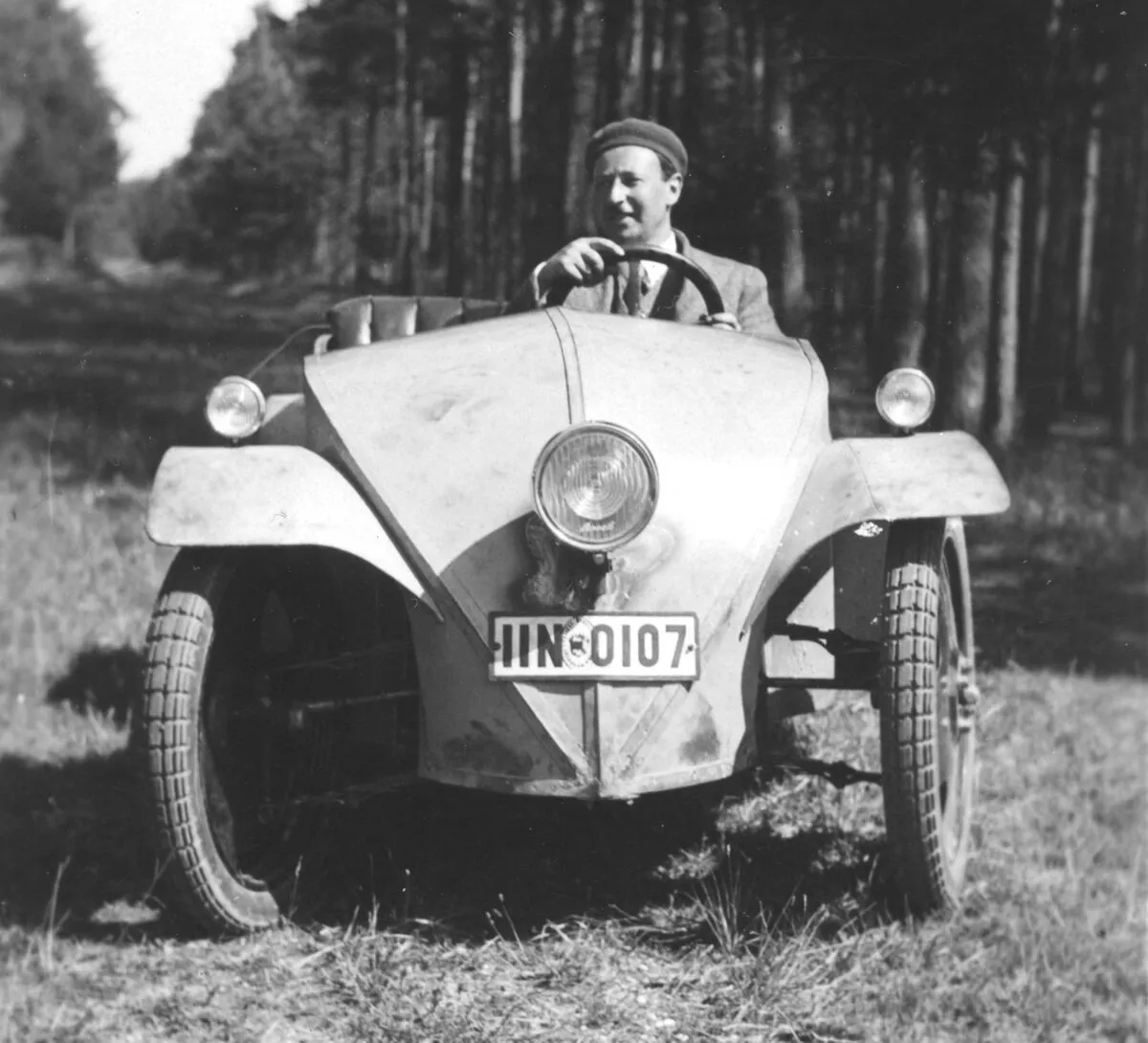
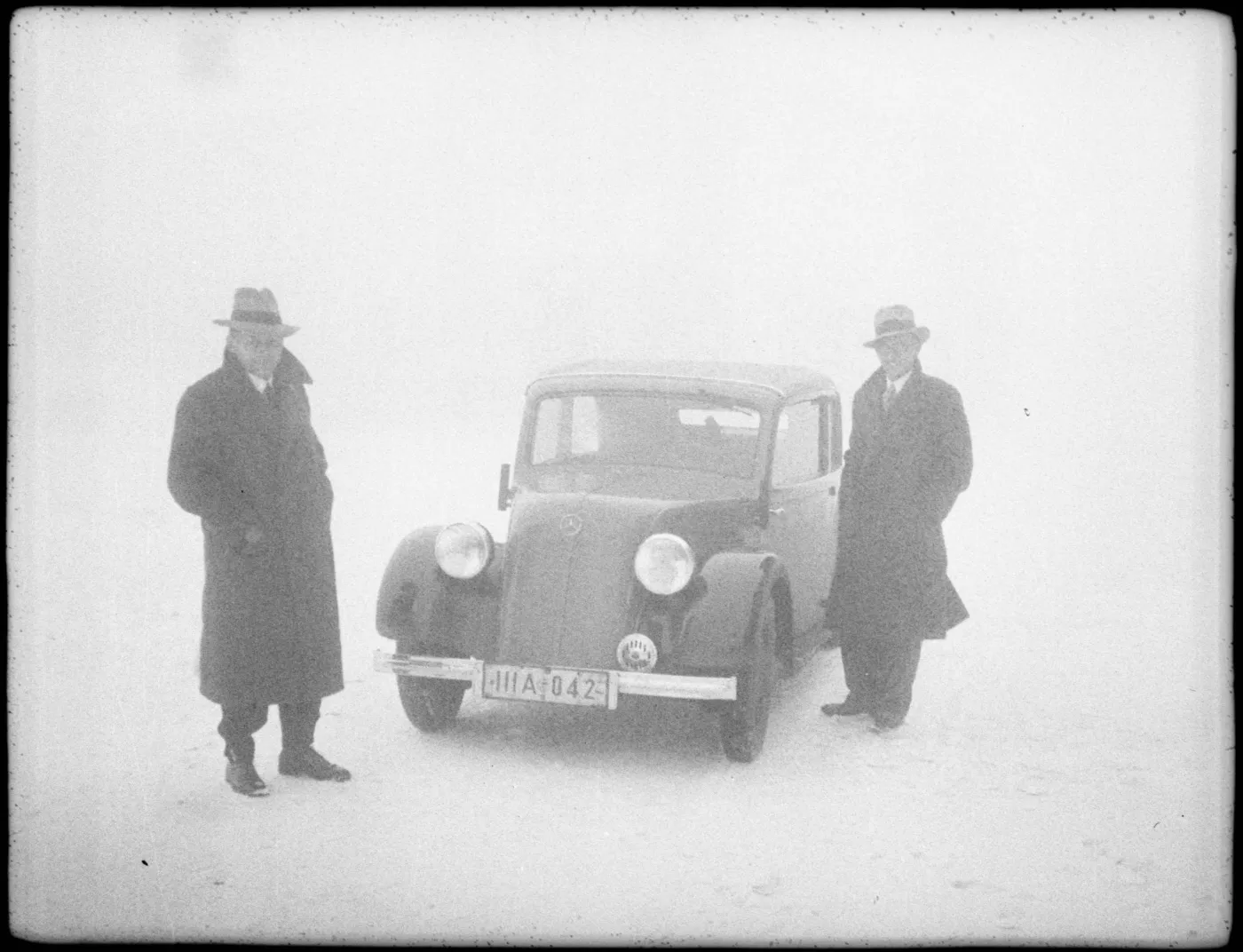
Besides Adler, Ganz works as a consultant engineer for Daimler-Benz and BMW, where the first models with independent wheel suspension are developed: the Mercedes-Benz 170 and the BMW AM1. He persuades Daimler-Benz's director Wilhelm Kissel and technical director Hans Nibel to develop rear-engined models under his supervision.
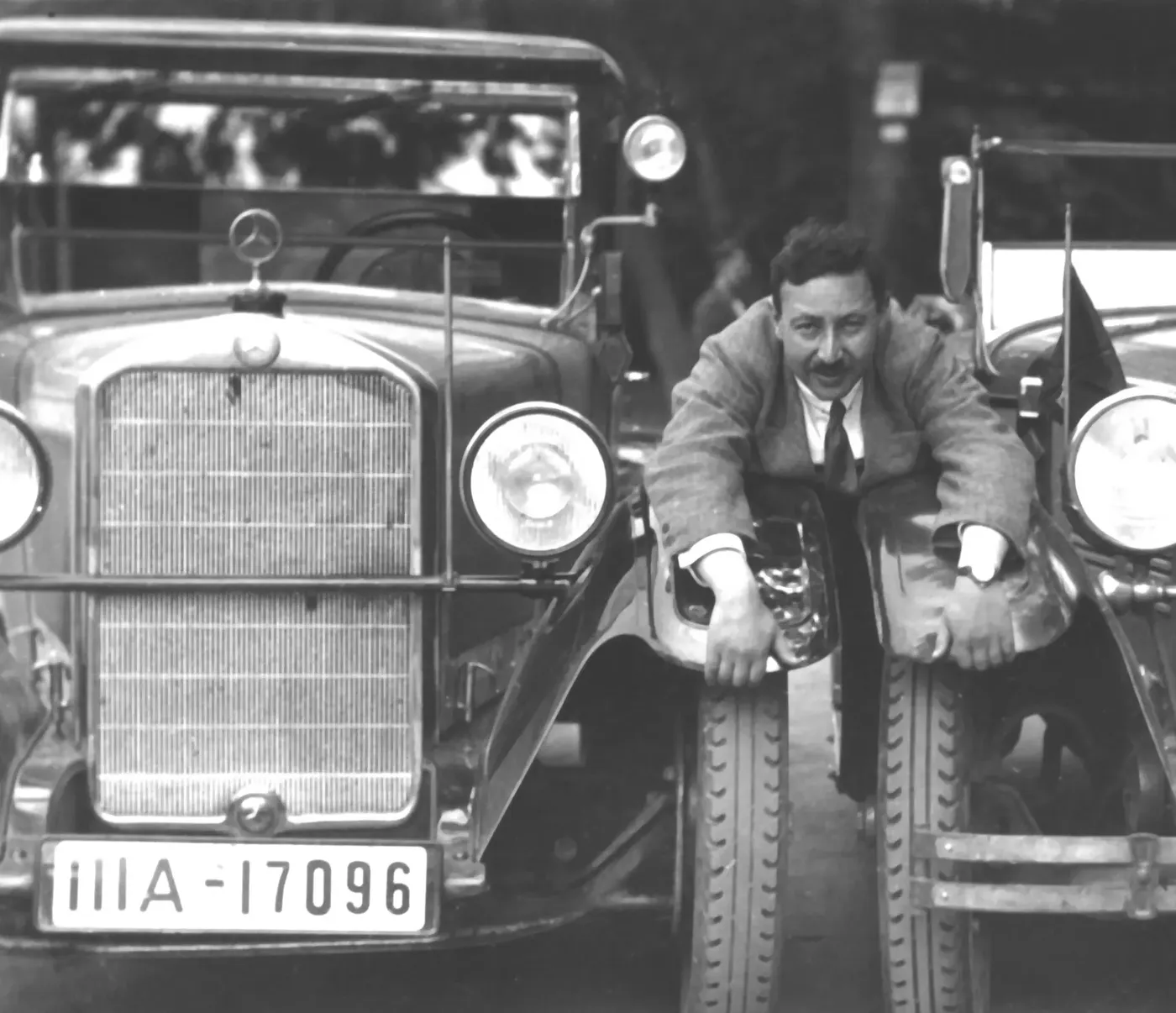
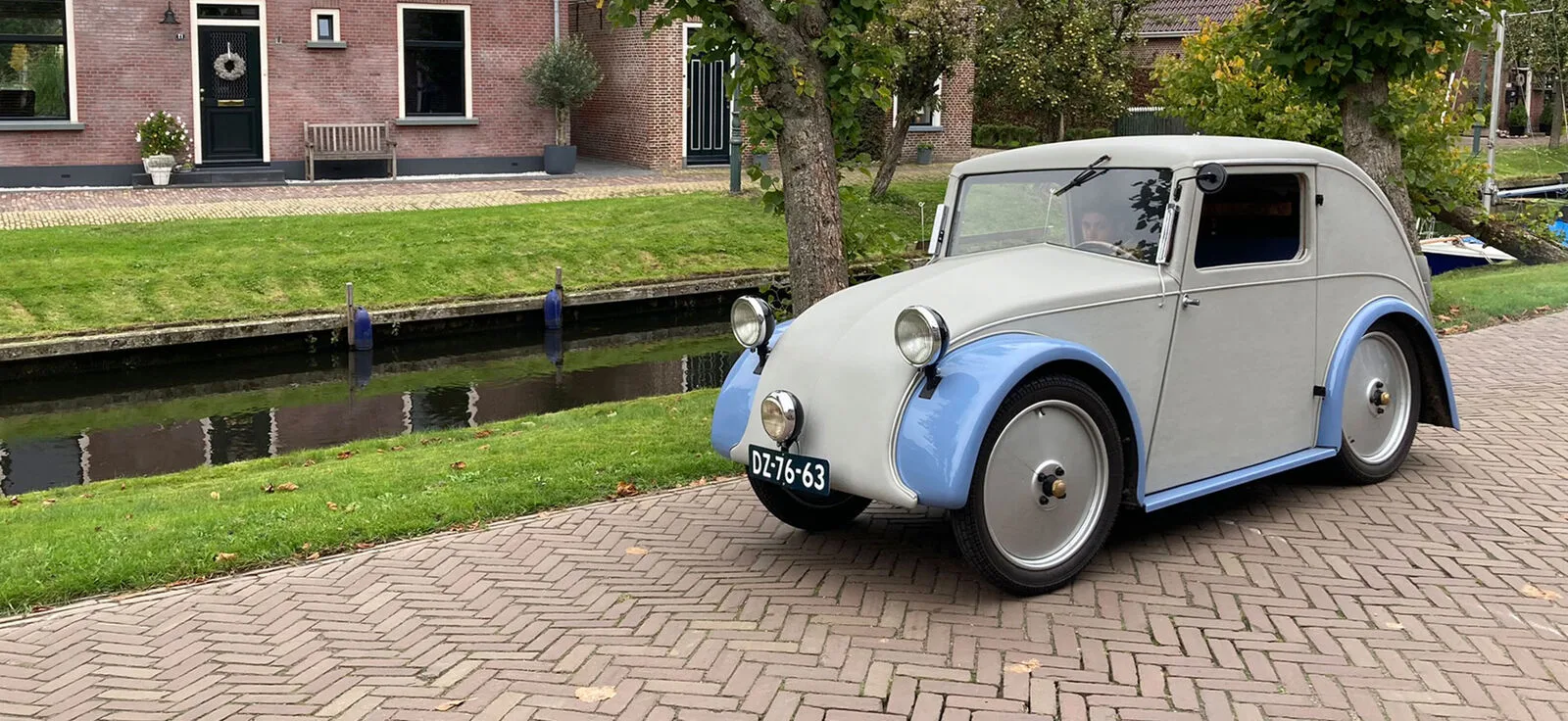
As technical consultant to the car maker Adler in Frankfurt, Ganz builds a second, sturdier prototype, completed in May 1931 and nicknamed Maikäfer (May bug). News spreads quickly, and many engineers test the car.
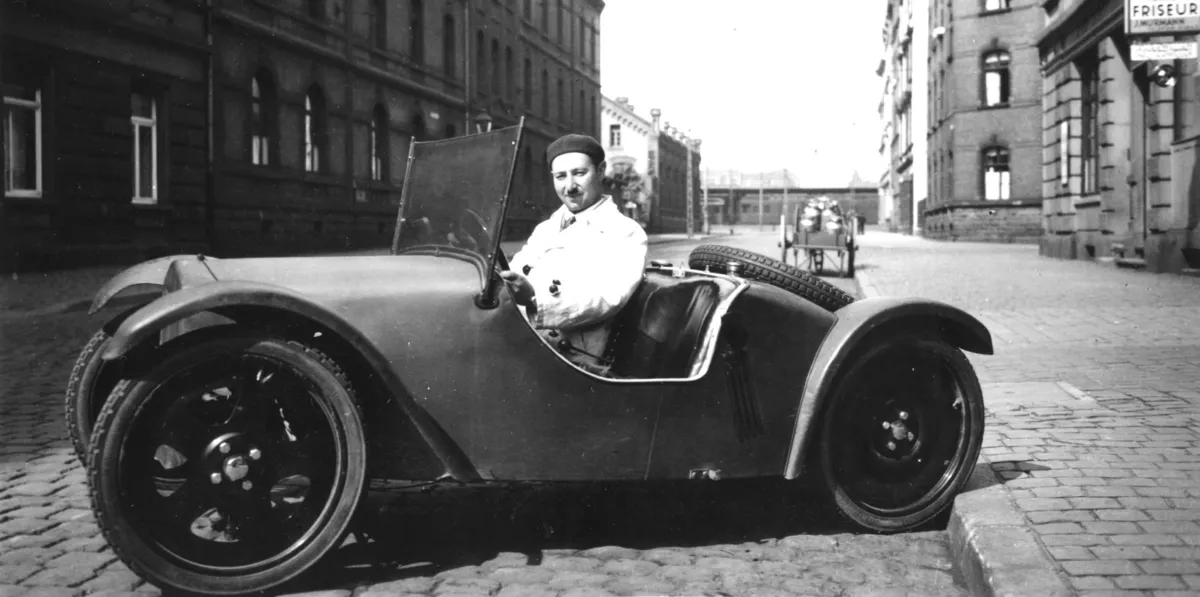
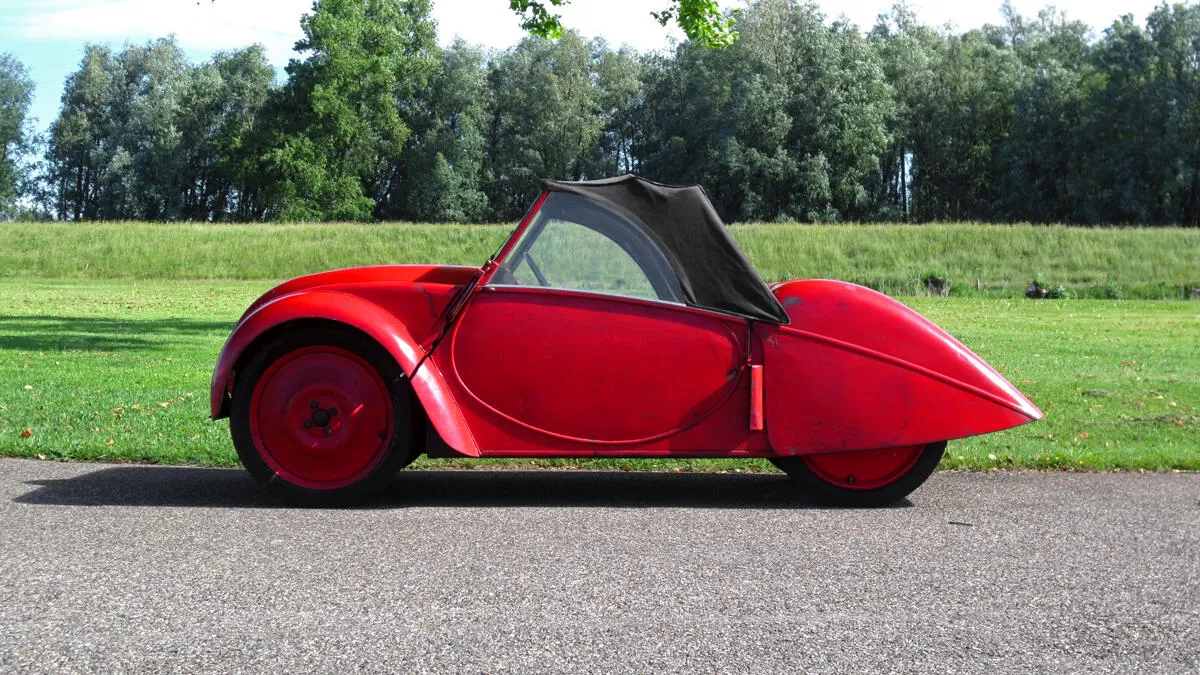 And today? 2014 The Maikäfer on show at the Louwman Museum Take a look →
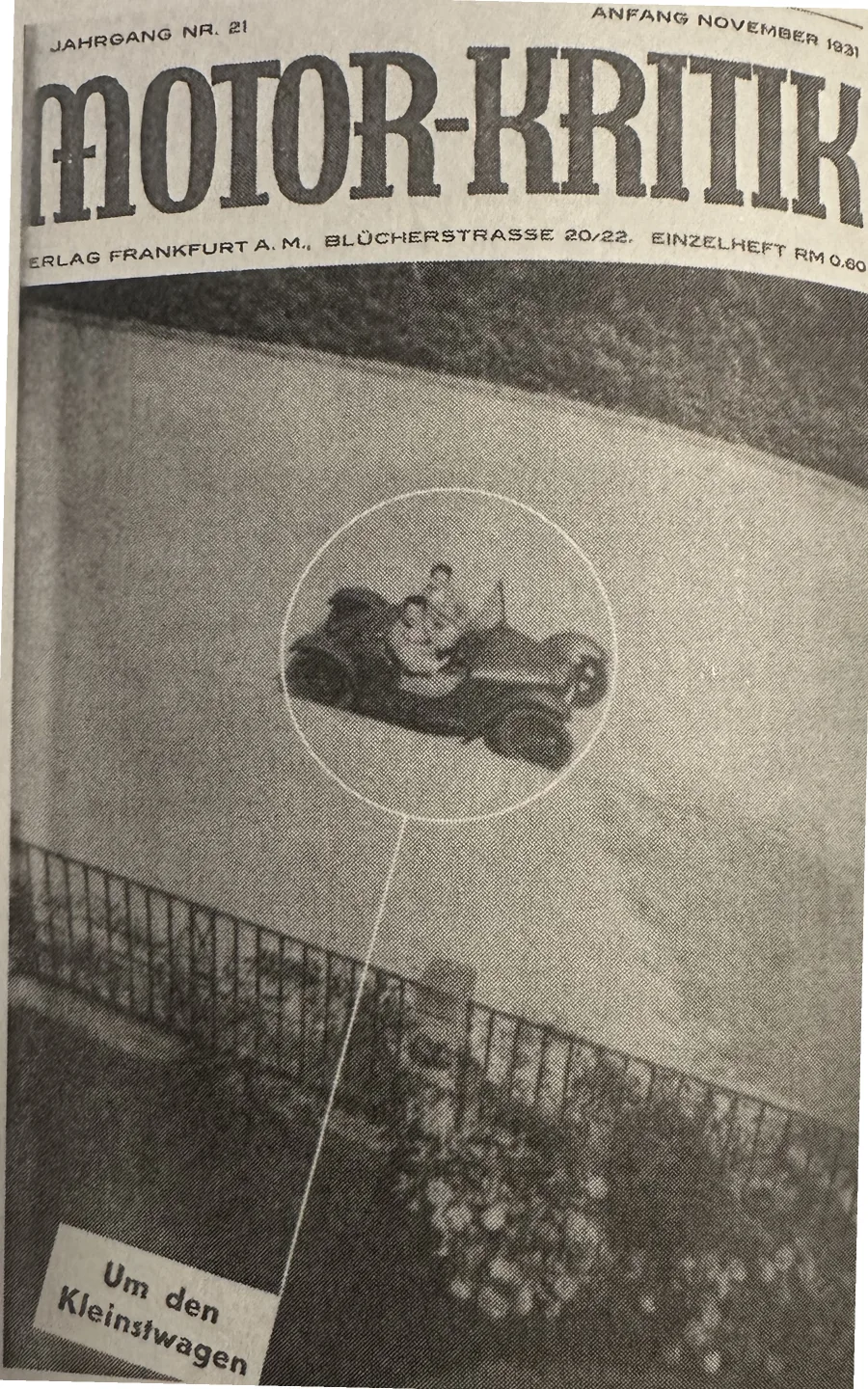
In October 1931 Ferry Porsche and Adolf Rosenberger of the Porsche design office come to Frankfurt to test-drive the Maikäfer. In November Ganz writes in Motor-Kritik that he has taken many colleagues from the press and members of "the competition" for drives; the cover shows the Maikäfer with two men on board, whom Paul Schilperoord identifies as Ferry Porsche and Rosenberger.
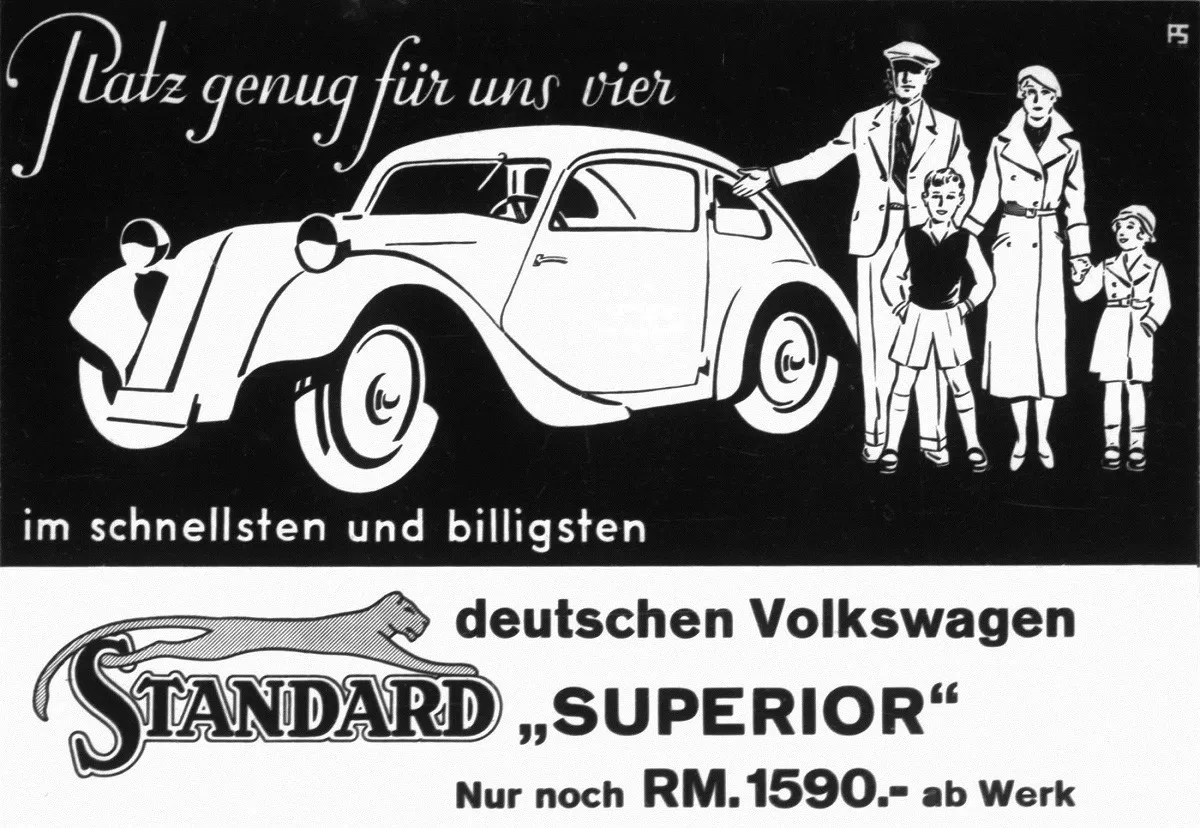
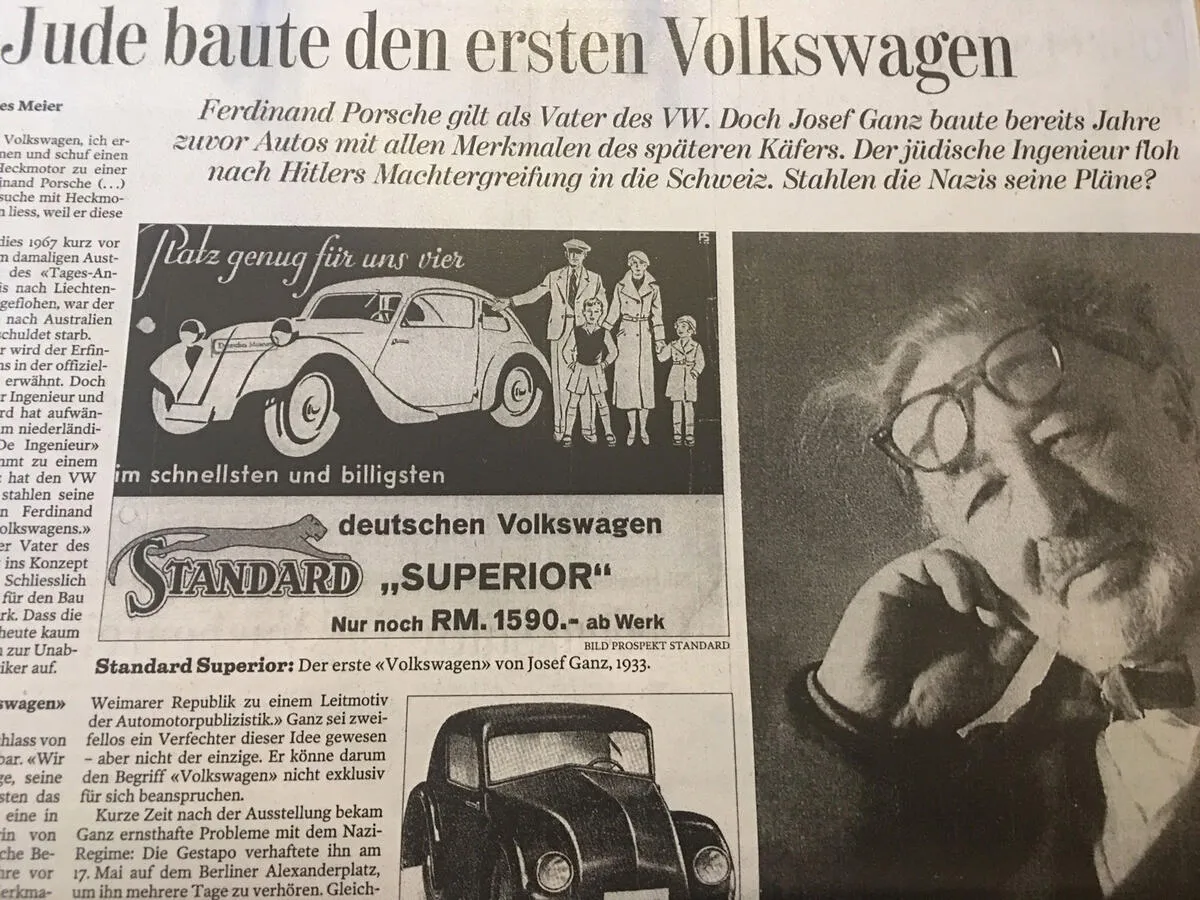
In February 1933 the Standard Fahrzeugfabrik of Ludwigsburg introduces the Standard Superior, a Volkswagen built on Ganz's patents, at the Berlin motor show. Adolf Hitler, chancellor for two weeks, opens the show and takes an interest in the car and its price of 1,590 Reichsmark. The brochure calls it "the fastest and cheapest German Volkswagen".
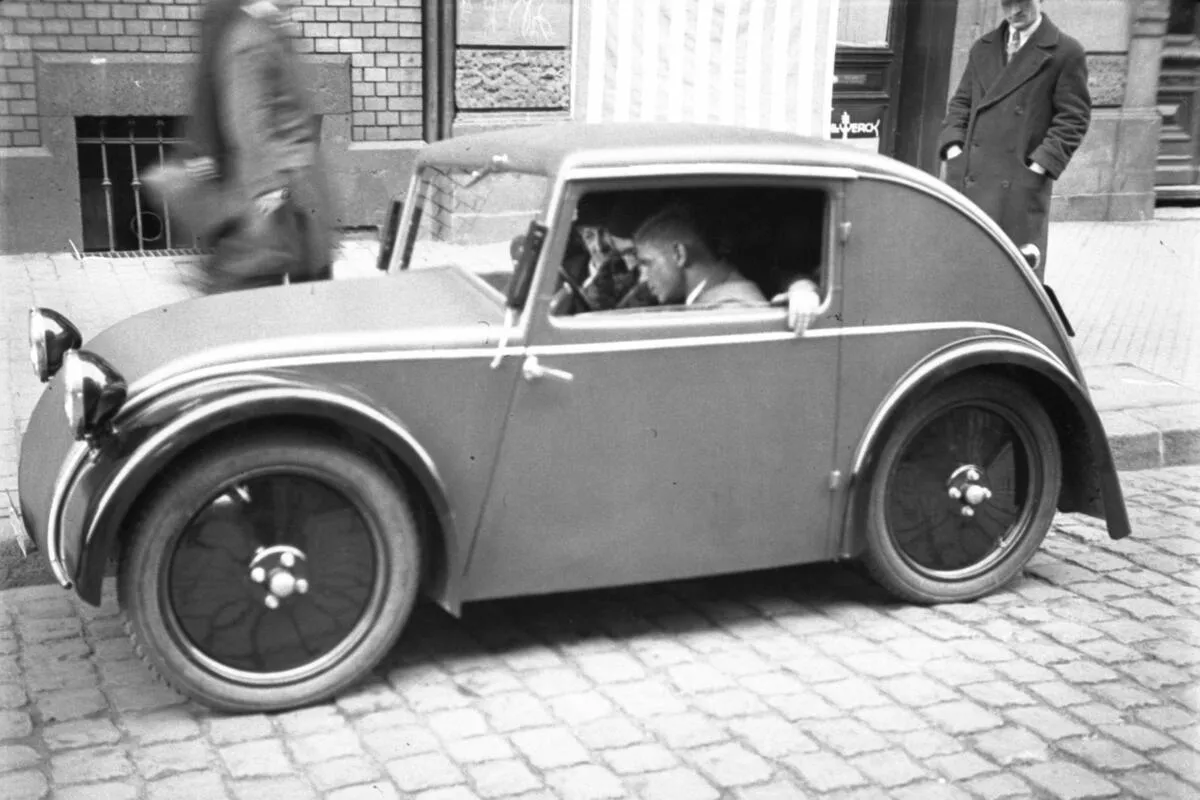
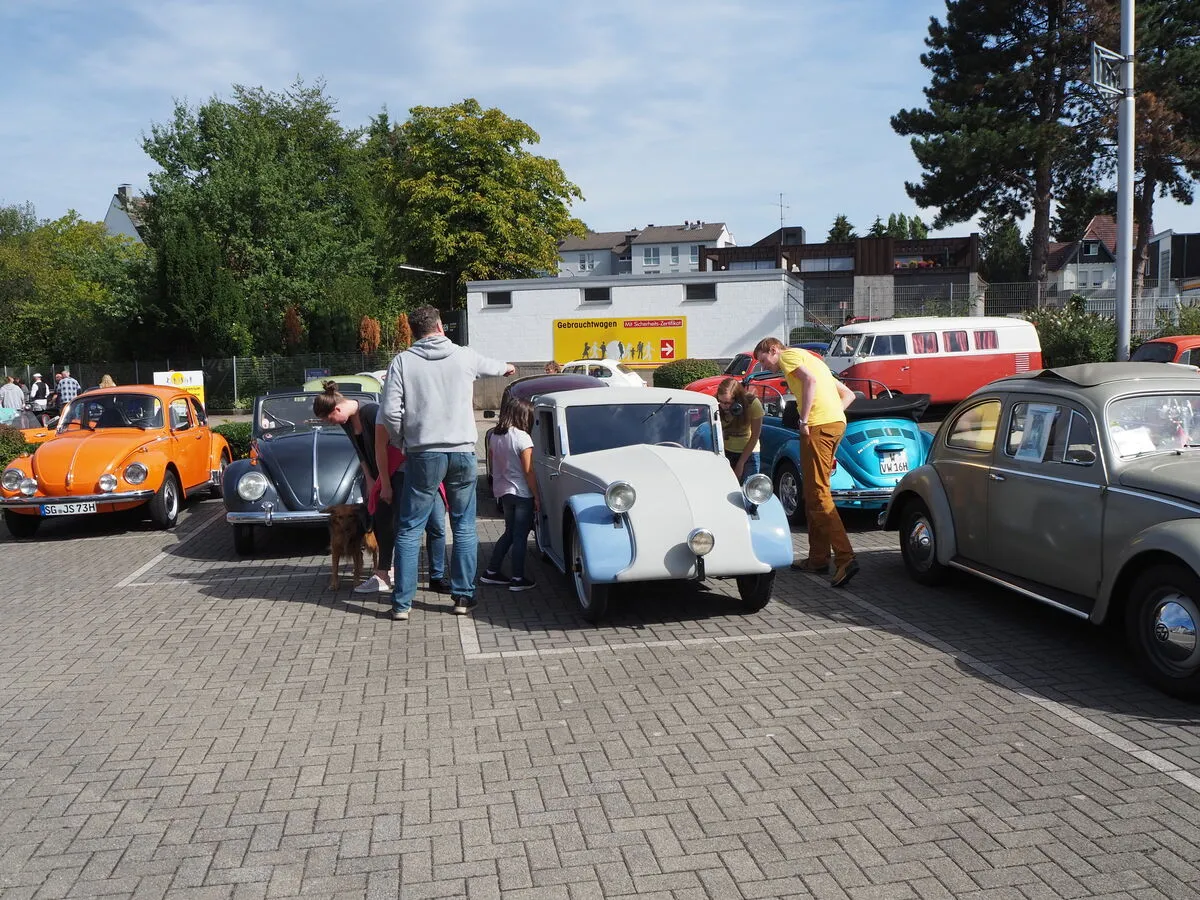 And today? 2017 A Superior type 1 drives again, restored with crowdfunding Take a look →
In September 1933 the Standard Fahrzeugfabrik presents the larger Standard Merkur together with a revised Superior. The 1934 Superior gains a rear seat with room for two children, a car for a small family.
In May 1933 the Gestapo arrests Ganz on fabricated charges of blackmailing the car industry. He is released after a month and can prove his innocence, but has to give up the editorship of Motor-Kritik. His contracts with the industry end; in March 1934 the Nazi government bans him from publishing altogether.
By the Berlin motor show of March 1934 Ganz has lost all his German contracts. Daimler-Benz later stated that it had never denounced him; on 22 January 1935, with Ganz already living in Switzerland, the two sides reached an agreement, and the inventions contract was put back into force in June 1935 until Ganz's lawyer terminated it with effect from 31 March 1936.
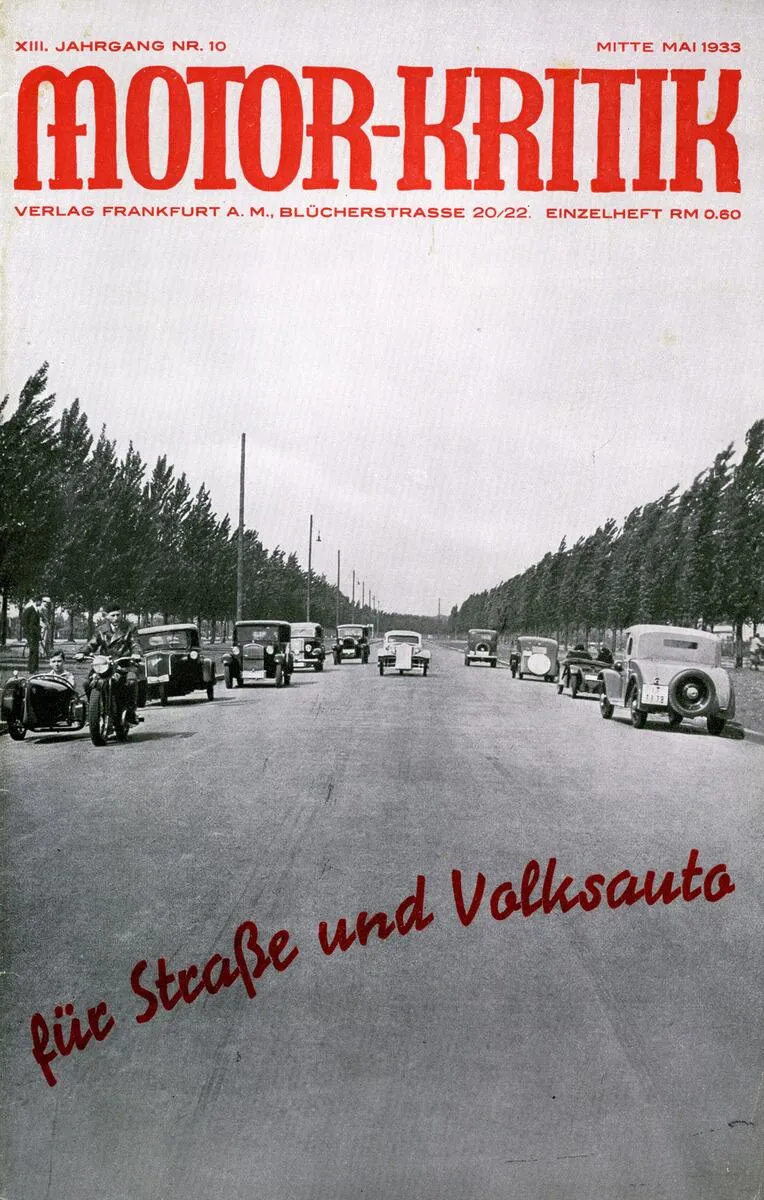
Some of Ganz's enemies in the car industry use their influence with the new government to have him arrested by the Gestapo in May 1933 on falsified charges of blackmailing the German car industry. The last issue of Motor-Kritik before his arrest is dedicated to "roads and the people's car". After one month he is released and able to prove his innocence.
After his release Ganz has to give up his position as editor-in-chief. His colleague and close friend Georg Ising takes over; Ganz keeps writing for Motor-Kritik until March 1934.
In December 1933 Tatra accuses Ganz of violating its patent DRP 549602 with his patent DRP 587409. Both concern a mid-mounted engine, but Tatra's describes a three-wheeler with a drive shaft to a single rear wheel, Ganz's an engine, gearbox and clutch built as one unit onto the central tube with direct drive to swinging rear half-axles. The Patent Office in Berlin rejects Tatra's claims in late March 1934 and the appeal in May 1934.
In March 1934 the Nazi government issues a full publication ban for Josef Ganz. His voice in Germany falls silent.
In 1934 Ganz leaves Germany. The same year the Reich association of the automotive industry commissions Ferdinand Porsche to design the Volkswagen, and the Standard Fahrzeugfabrik is forbidden to use the word Volkswagen in its advertising. By January 1935 Ganz is living in Switzerland.
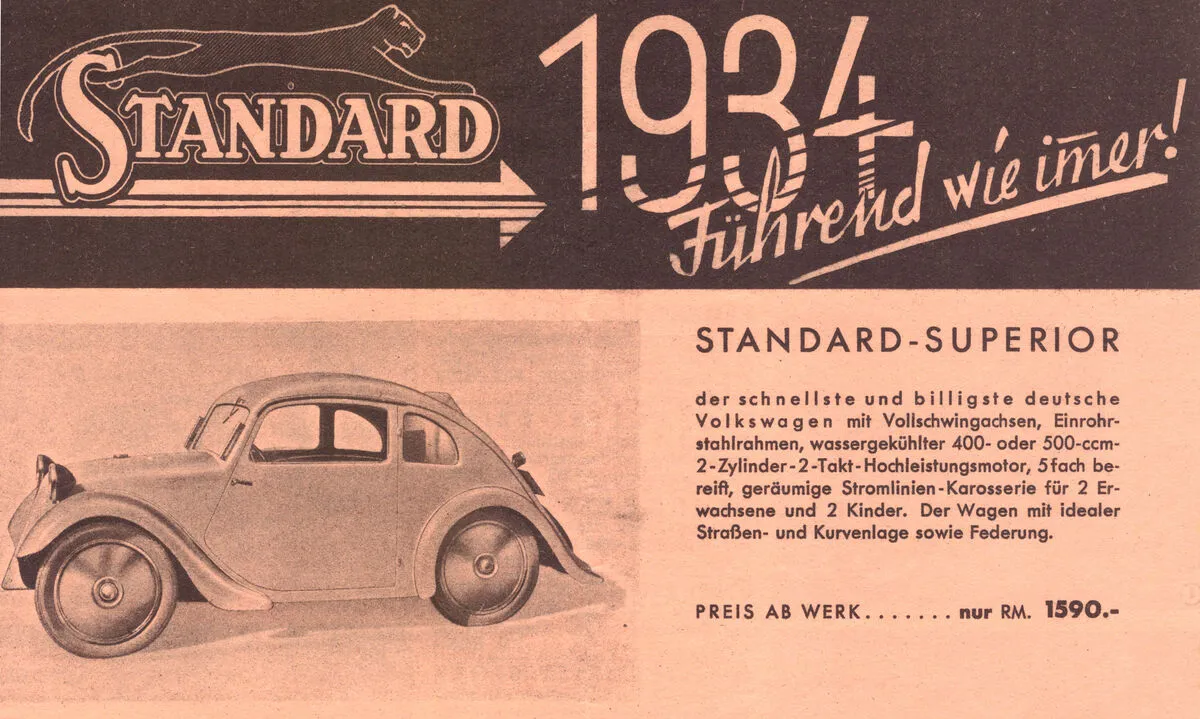
The Standard Fahrzeugfabrik, which has just released a model with room for a family with two children, is forbidden to use the name Volkswagen in its advertising.
Ganz flees Germany in 1934. The biography page of josefganz.org gives June 1934, the page on Daimler-Benz says "later in 1934"; the exact date is to be confirmed from the book.
When Daimler-Benz and Ganz reach their agreement on 22 January 1935, Ganz is already living in Switzerland. He settles there for good in the summer of 1935.
Ganz settles in Switzerland in the summer of 1935. With the support of the federal authorities he develops a Swiss Volkswagen: three prototypes in 1937, a six-day test drive in 1938, a contract with Rapid for a pre-series. The war stops everything; Ganz is caught between the Gestapo, the Swiss aliens police and officials who claim the project for themselves. After 1945 he fights lengthy court battles and leaves Switzerland in 1950.
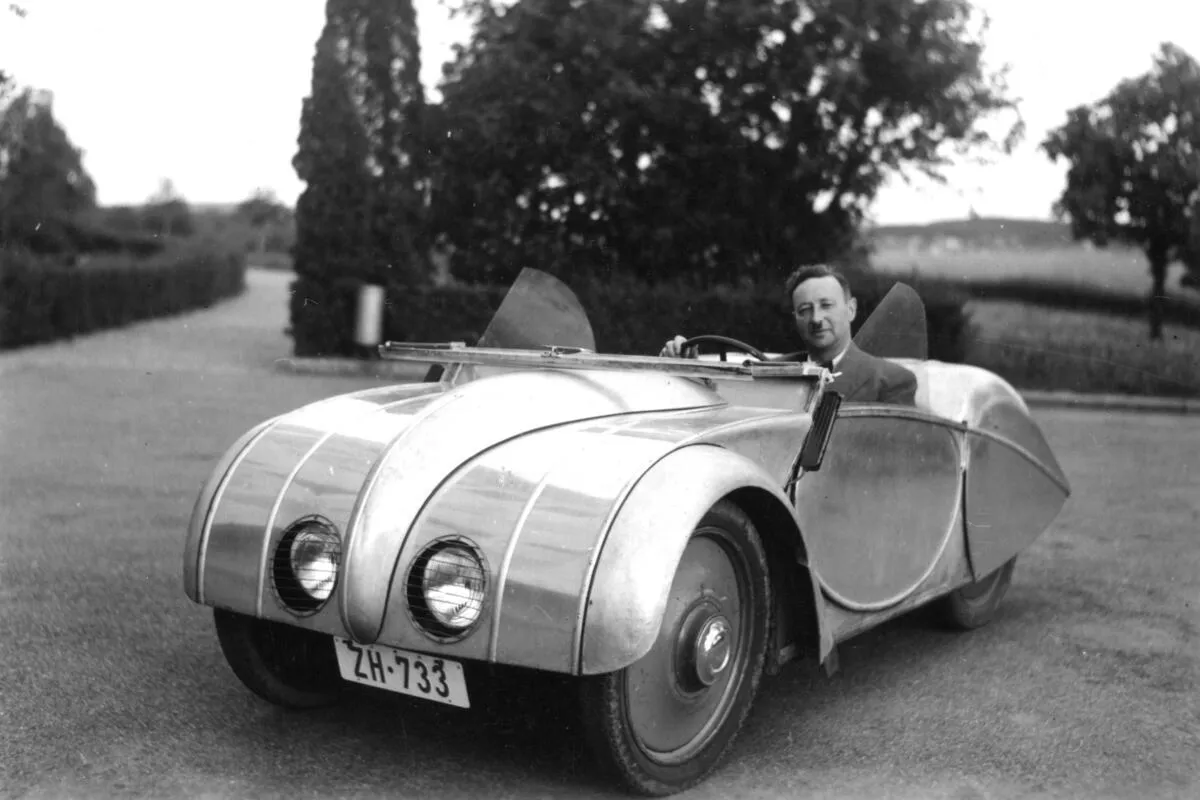
In the summer of 1935 Ganz settles in Switzerland and demonstrates his Maikäfer and a Standard Superior to representatives of the federal labour authorities. They note the Maikäfer's "astonishingly good road holding" and decide to investigate production in Switzerland. In October 1936 a contract is signed for the development of a Volkswagen according to Ganz's Swiss patents.
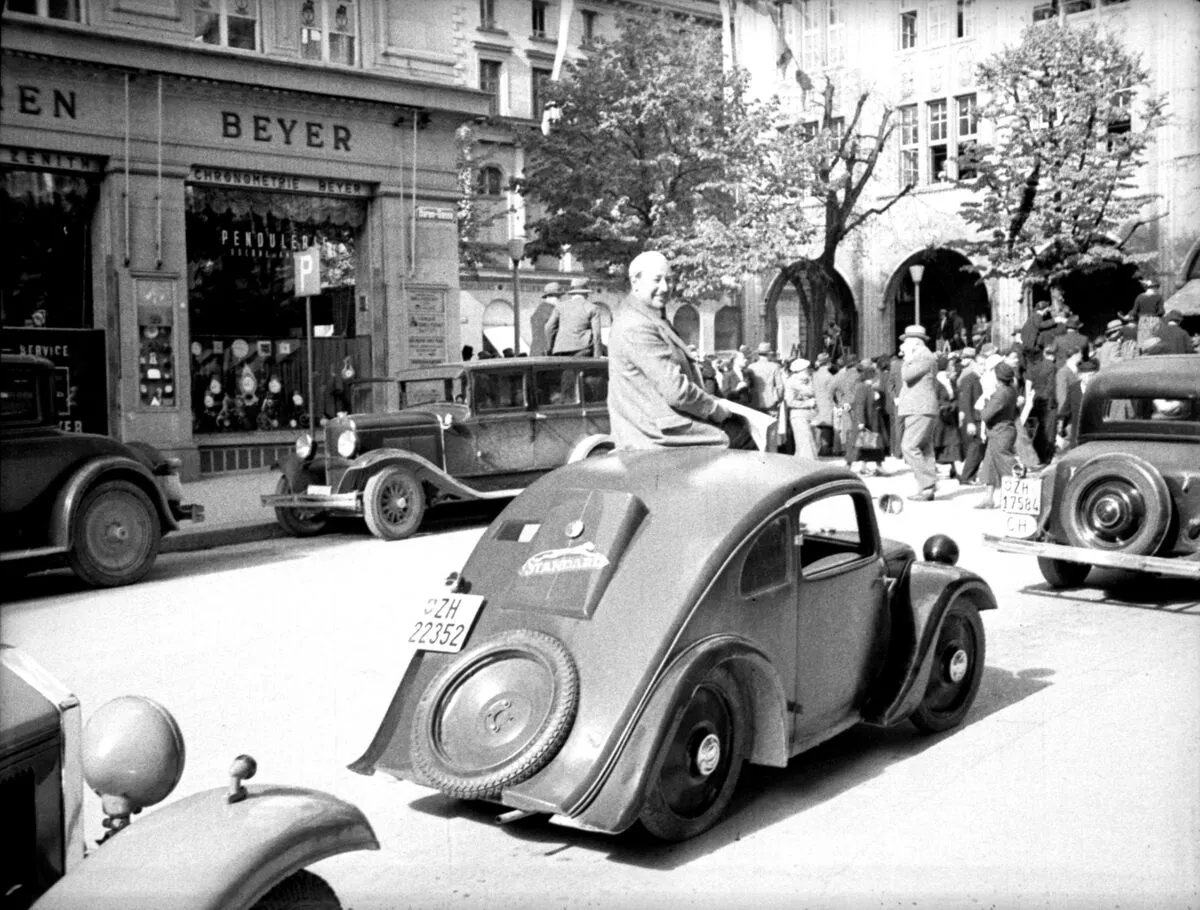
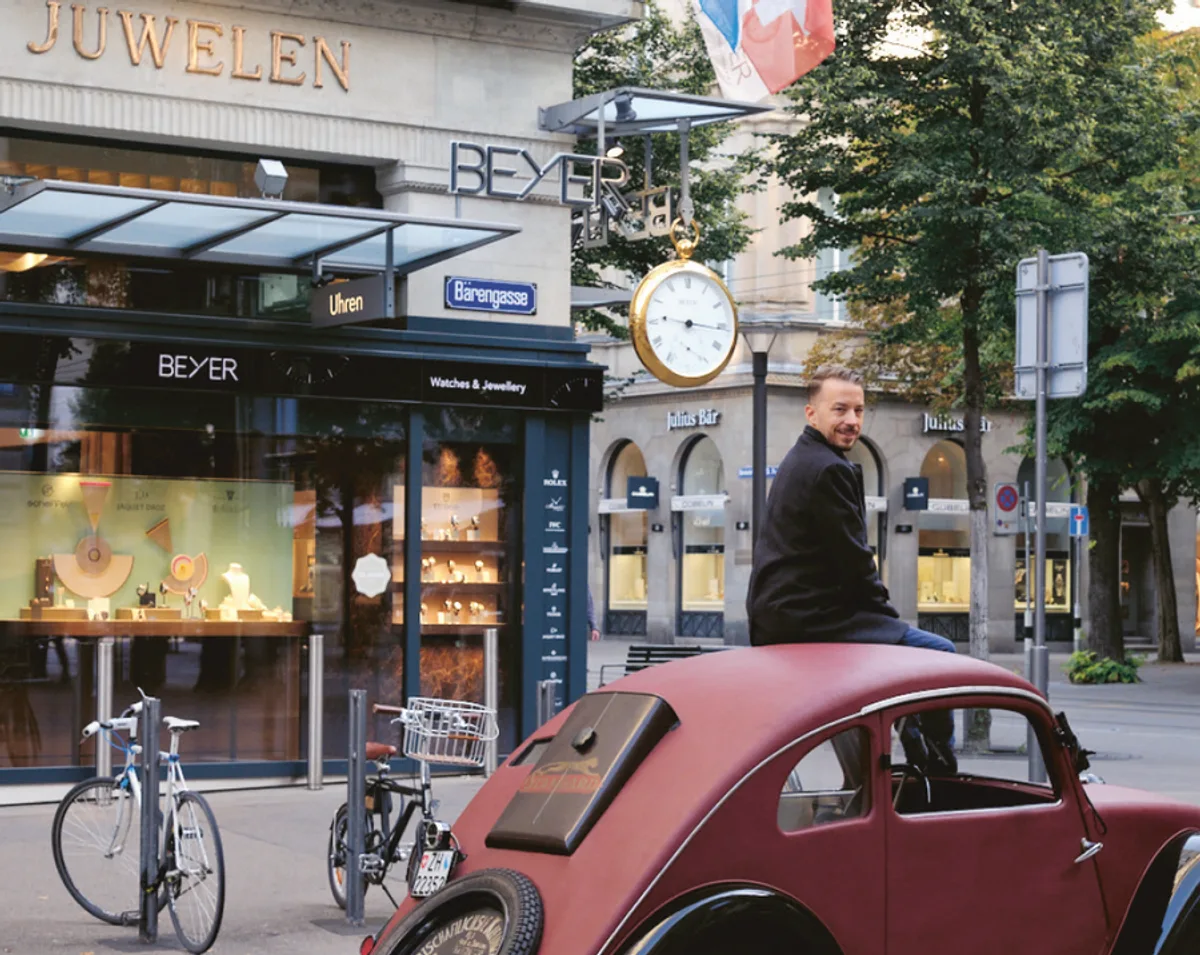 And today? 2021 The 1936 photo at Bahnhofstrasse, re-enacted Take a look →
In 1937 Motosacoche in Geneva builds three prototypes. They use a backbone chassis with the engine and gearbox just ahead of the driven rear swing axles, and a streamlined two-seater convertible body much like the 1923 design. Ganz chose an open two-seater because it was the cheapest to build.
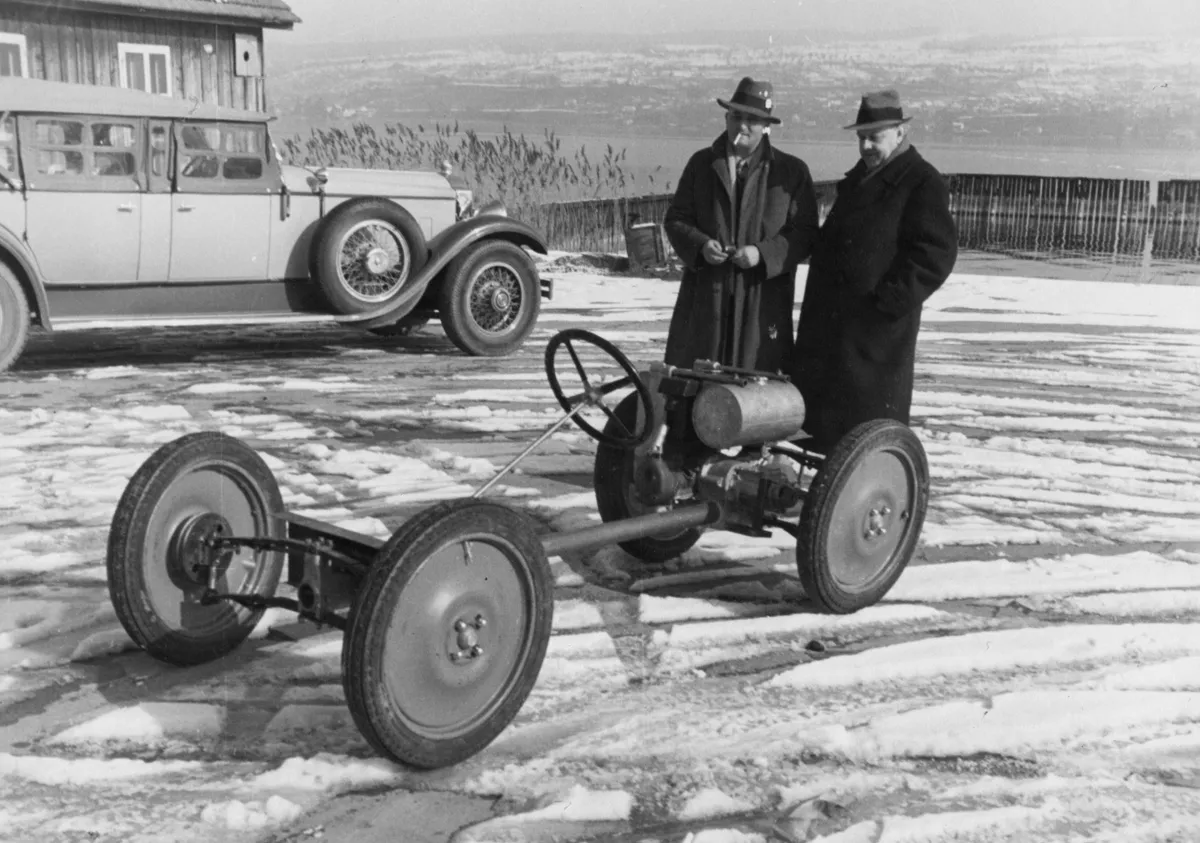
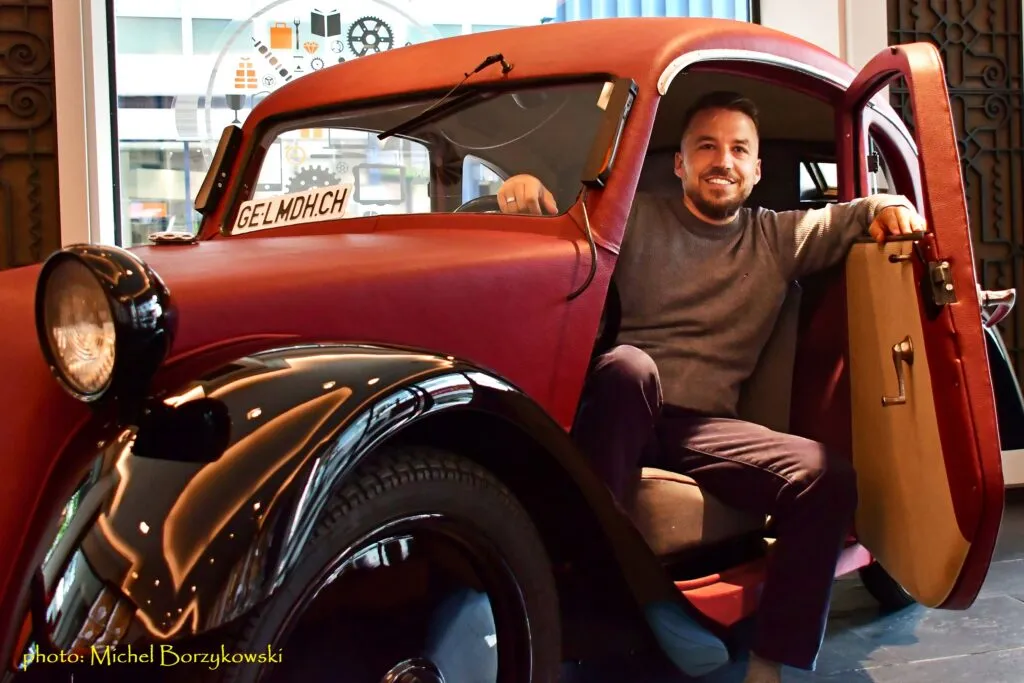 And today? 2020 A Standard Superior back in Geneva Take a look →
In October 1938 one of the prototypes completes a six-day test drive all over Switzerland. The report concludes that it went "splendidly". Rapid Motormäher AG, a maker of motor mowers, is contracted to build twenty to forty pre-series cars; licensed production in Poland and France is planned.
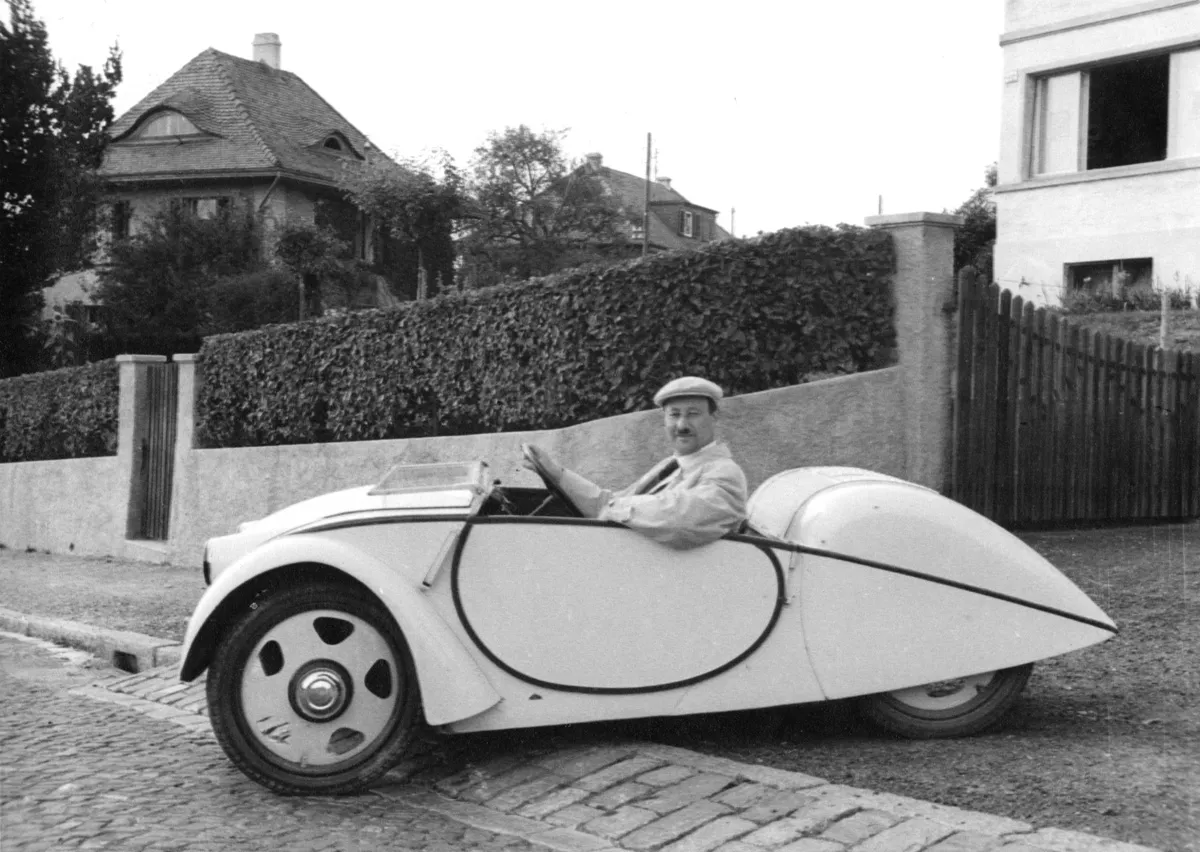
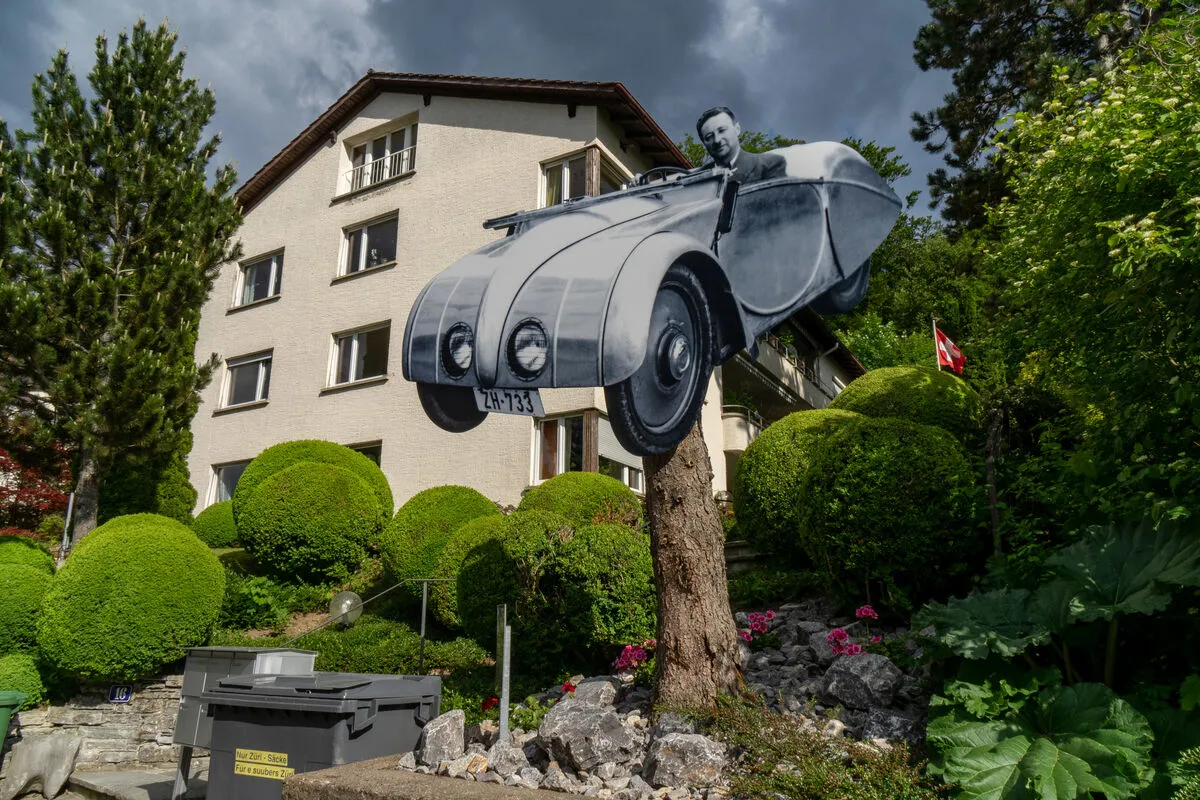 And today? 2018 The Silberfisch as art at his first Swiss address Take a look →
With the outbreak of war all plans stop. Ganz is again under threat from the Gestapo and from Swiss officials who try to claim the Swiss Volkswagen project as their own. He narrowly avoids internment in a labour camp for immigrants or being handed over to Germany. In March 1941 the Swiss authorities ban him from working, and a dispute with the aliens police follows. After the war Ganz goes to court against his Swiss and German adversaries. Accused of being a charlatan, he is defended by Robert Braunschweig, editor of the Automobil Revue. In 1950, worn down by years of litigation, he leaves Switzerland for Paris.
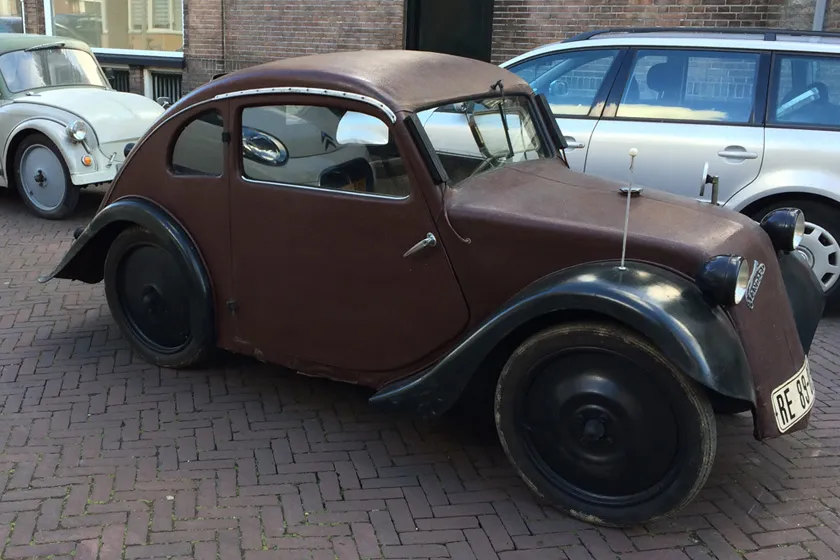
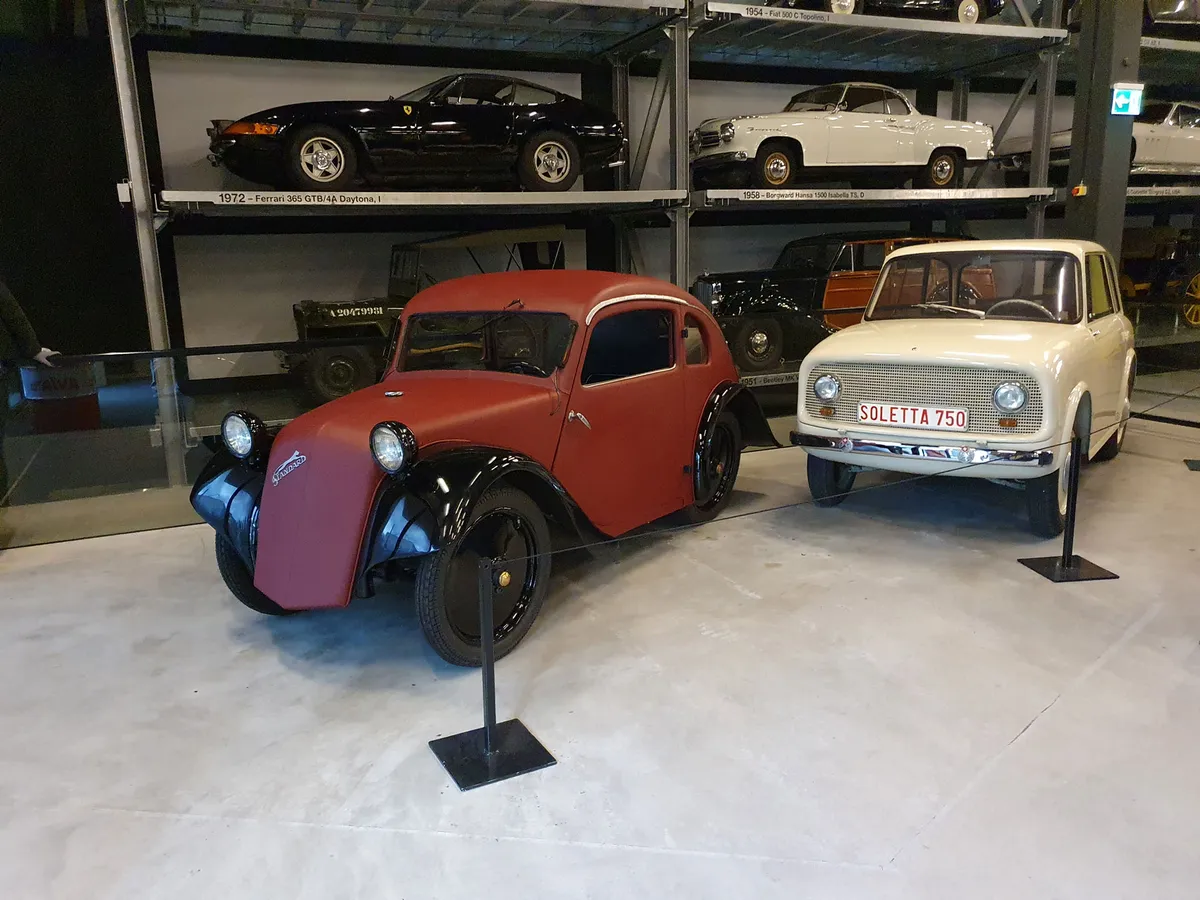
After the war Rapid Motormäher AG in Dietikon near Zurich builds around forty pre-series cars, but a larger series is never realised. Three cars are known to survive: one unrestored at the Louwman Museum in the Netherlands, one restored at the Swiss Museum of Transport in Lucerne, and one apparently with a collector in India. Metternich counts 34 cars sold.
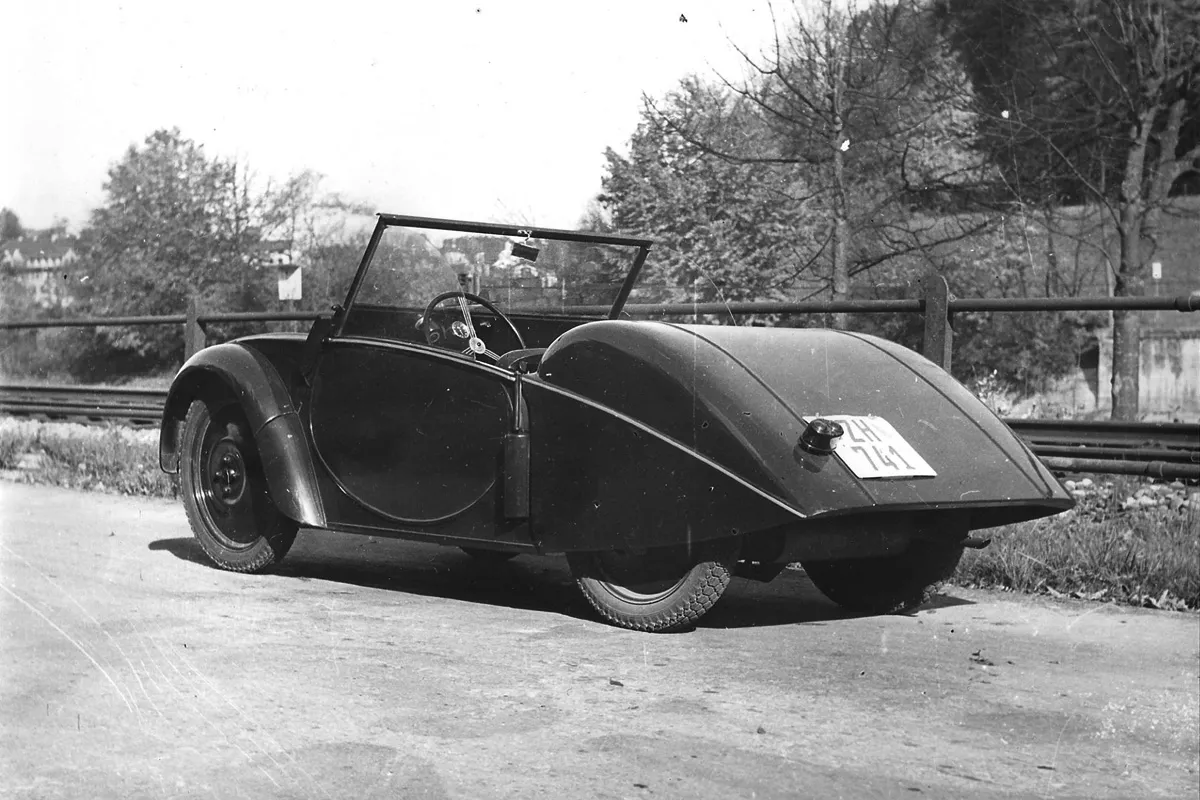
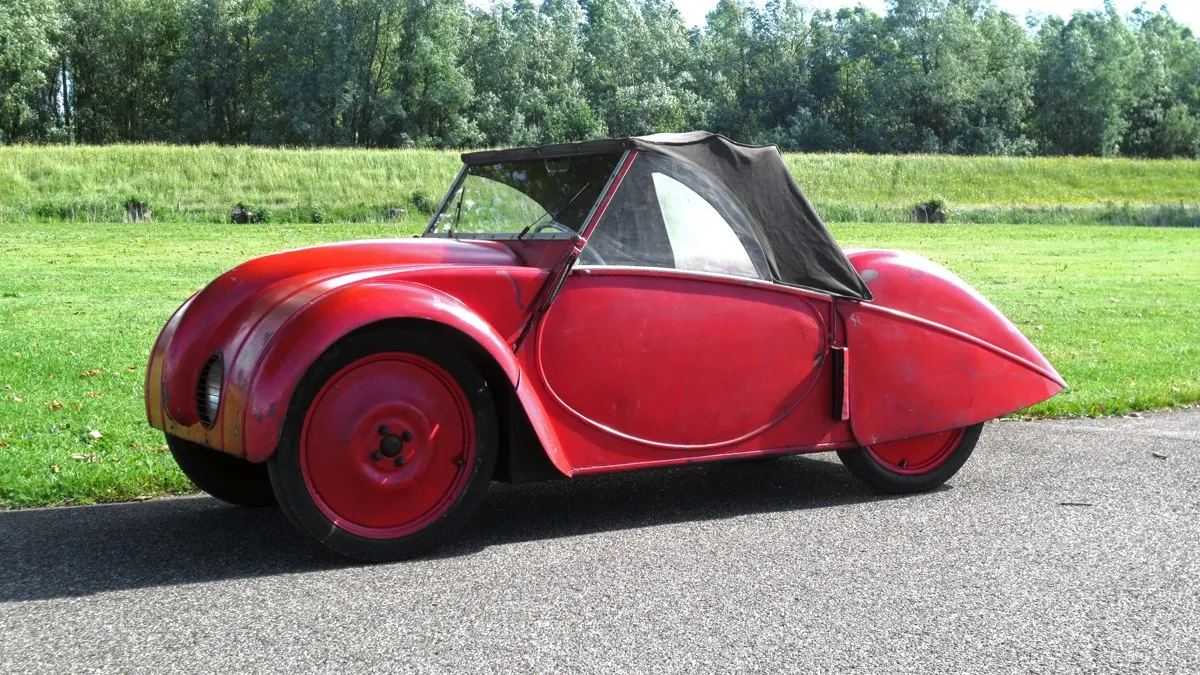 And today? 2018 A surviving Rapid at the Louwman Museum Take a look →
Ganz moves to Paris in 1950. He has contacts in France: for the Julien company he had designed the small MM5 and MM7 in 1947–1949. But against the German Volkswagen, now conquering the world, a new small car no longer stands a chance. On 11 August 1951 he boards a ship in Marseille, bound for Australia.
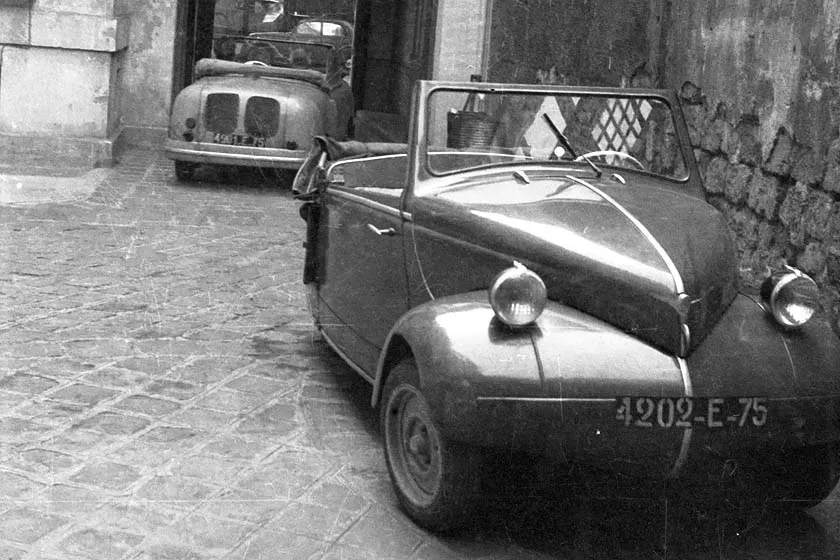
For the Société des Études Automobiles M. A. Julien Ganz works on a new small car: the MM5 (1947–1949) and the MM7 (1949).
According to the note of the German embassy in Australia of 1965, Ganz was employed in the French automobile industry from 1949 to 1951.
After a longer stay in Paris, Ganz embarks at Marseille on 11 August 1951 for Australia.
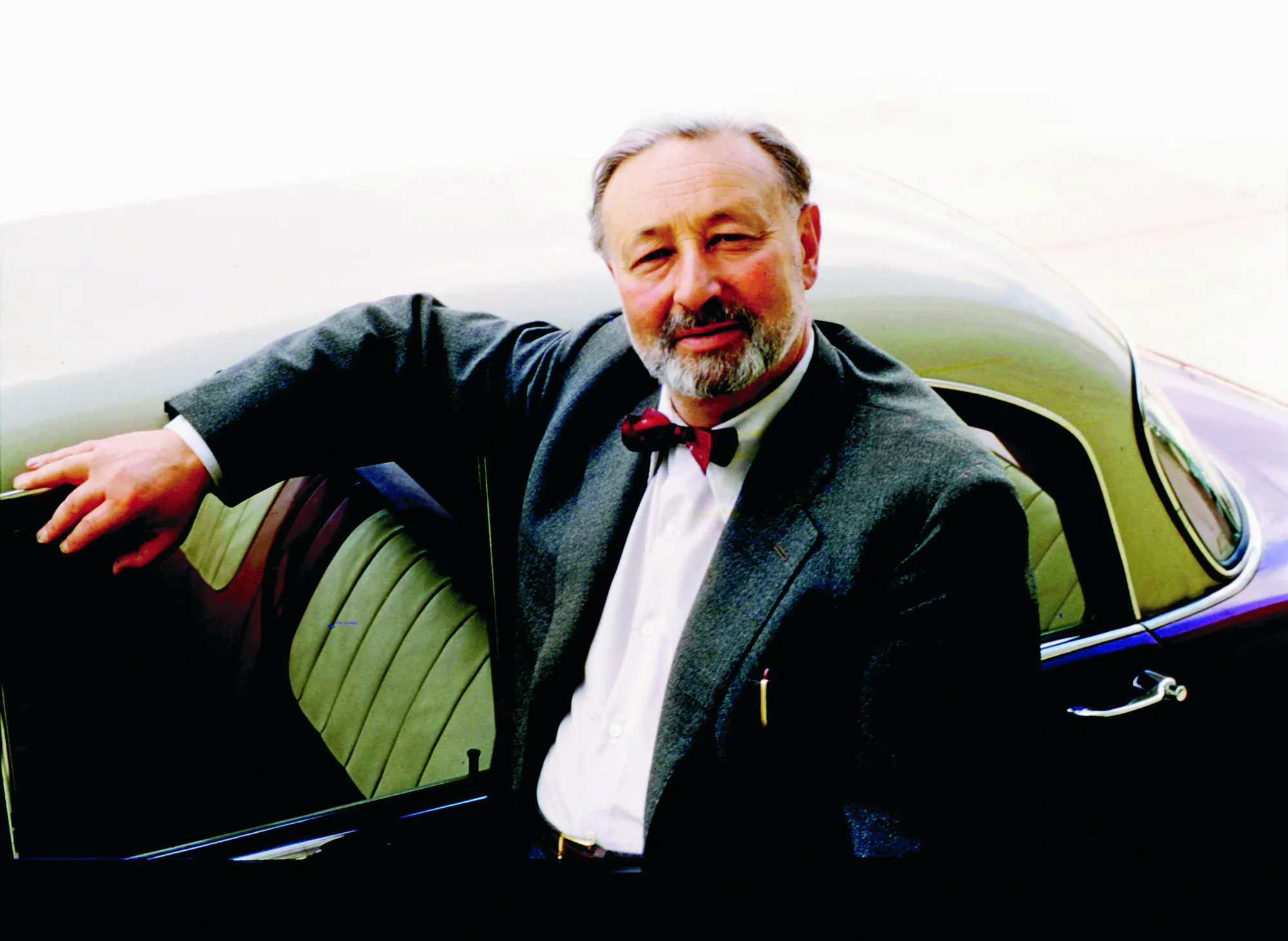
In Australia Ganz works for General Motors-Holden from 1955. In 1958 Volkswagen chief Heinrich Nordhoff names him publicly as the editor who spurred the young engineers; in 1961 Ganz helps Volkswagen in the patent case brought by Tatra. After heart attacks in the early 1960s he lives at Edgewater Towers in St Kilda, Melbourne, where he dies on 26 July 1967.
In 1951 Ganz leaves the old world behind and arrives in Australia by ocean liner.
From 1 August 1955 Ganz works for General Motors-Holden with a secure income, and stays until his retirement.
Accepting the Elmer A. Sperry Award for Volkswagen in New York on 13 November 1958, Heinrich Nordhoff names Josef Ganz as the only figure from the car's early history besides Porsche: the editor who spurred young engineers. In 1961 Ganz helps Volkswagen in the patent case brought by Tatra, and articles by Dieter Grossherr recall him. In his last years he receives an honorary stipend from Wolfsburg.
After a series of heart attacks in the early 1960s Ganz is almost bedridden. He moves into Edgewater Towers, Melbourne's first privately developed high-rise apartment block, on Marine Parade in St Kilda, and lives there until his death.
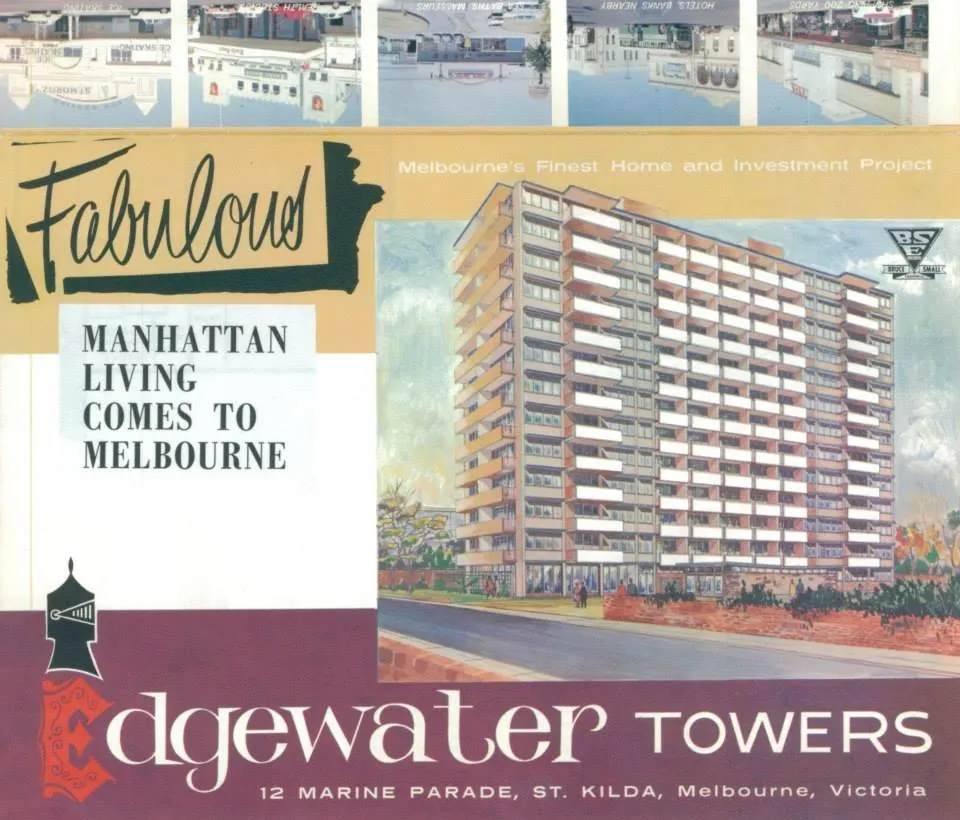
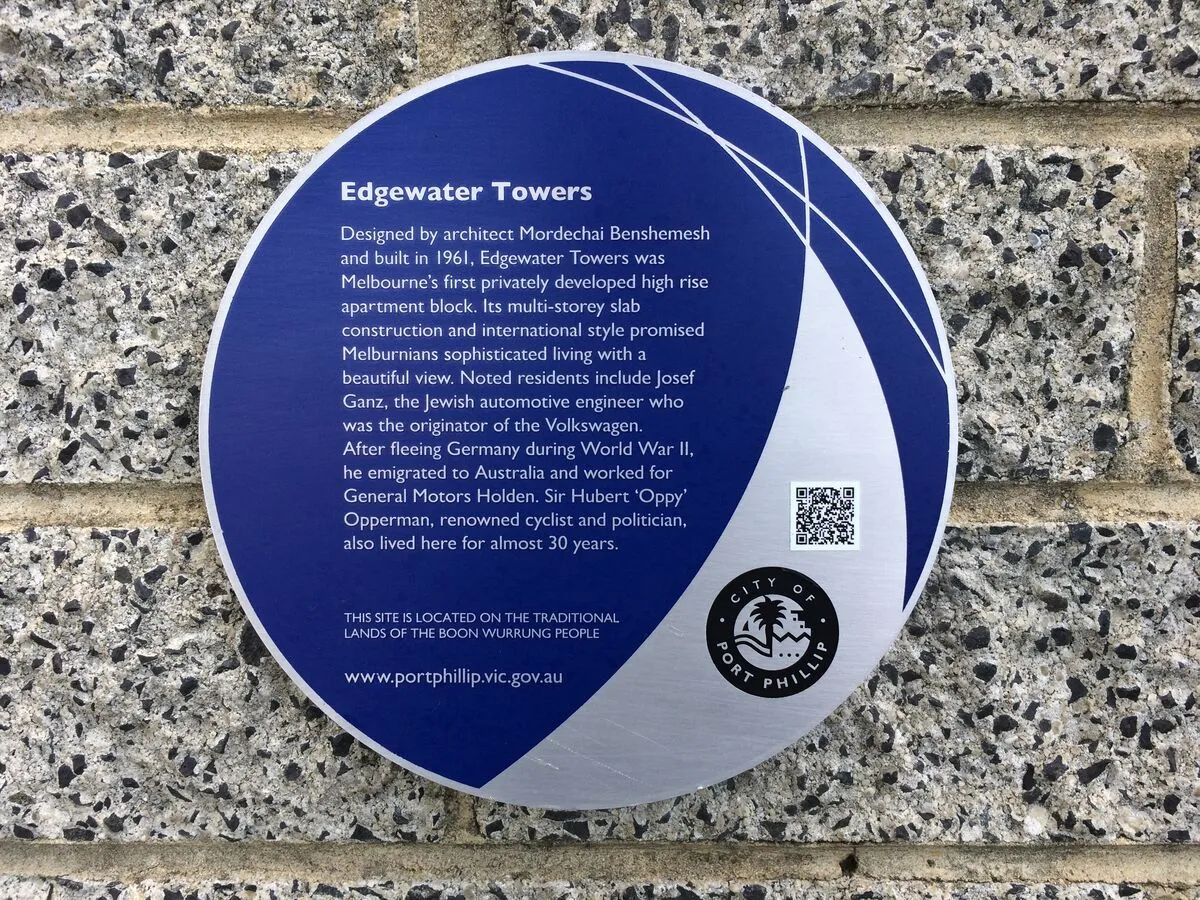 And today? 2017 A heritage plaque on Edgewater Towers Take a look →
On 18 October 1965 the embassy of the Federal Republic of Germany in Canberra argues that Ganz should receive the Order of Merit: as editor of Motor-Kritik he "took a keen interest in the development of a German Volkswagen and, together with other engineers like Professor Porsche, has greatly contributed to realizing this project". On 24 November and 1 December 1965 the Australian authorities refuse, citing their rules on foreign decorations. The file does not show that the award was ever offered to Ganz.
Josef Ganz dies on 26 July 1967 in St Kilda, Melbourne, largely forgotten. He leaves behind an archive of letters, drawings and documents, the material from which his story could finally be told.
For decades the name Josef Ganz is missing from the story of the Volkswagen. In 1990 the Automobil Revue prints a two-part series on him. Paul Schilperoord's research leads to the biography, published in Dutch in 2009 and in English and German in 2011; a heritage plaque in St Kilda follows in 2017, a documentary in 2019, and museums put his cars on show.
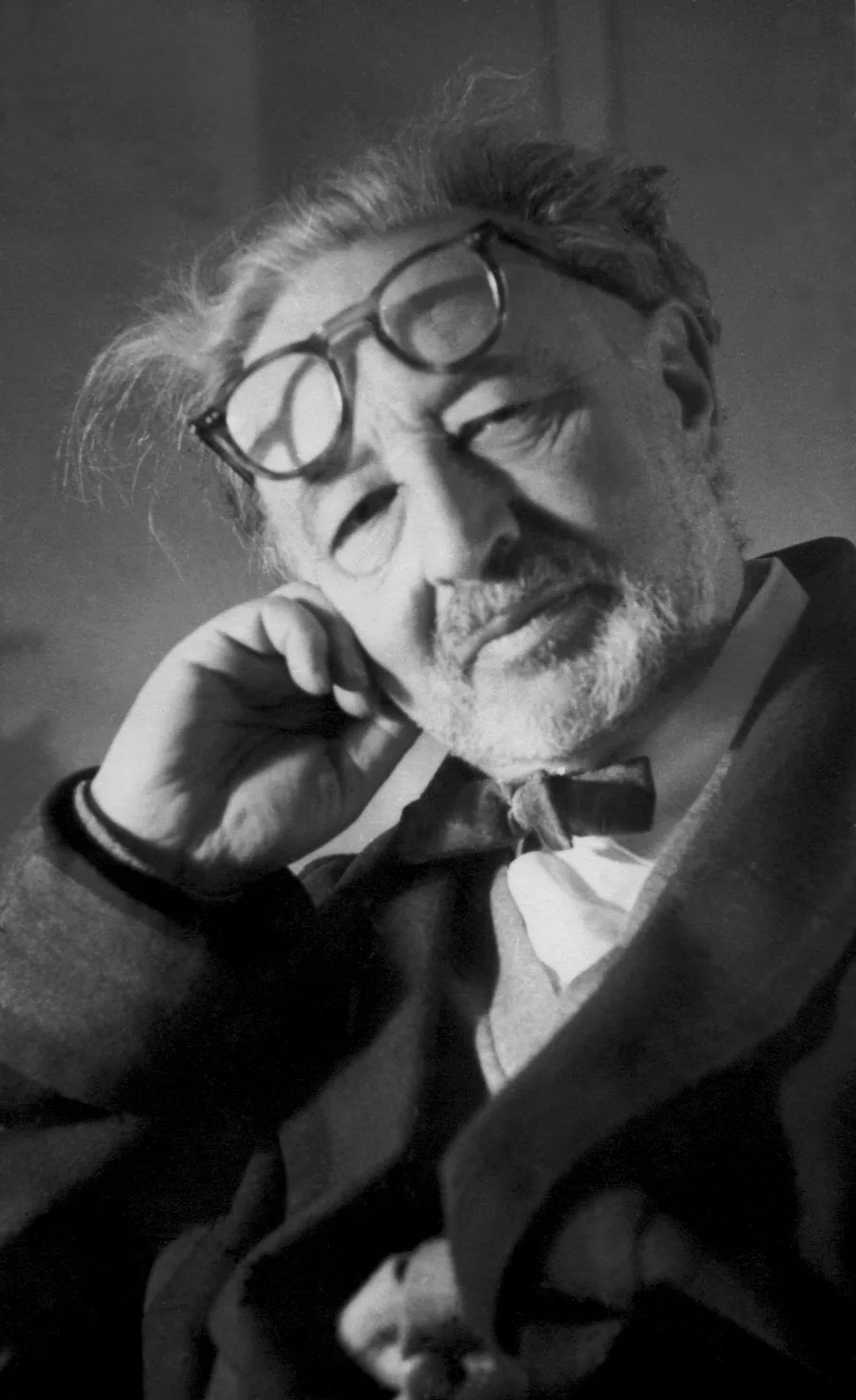
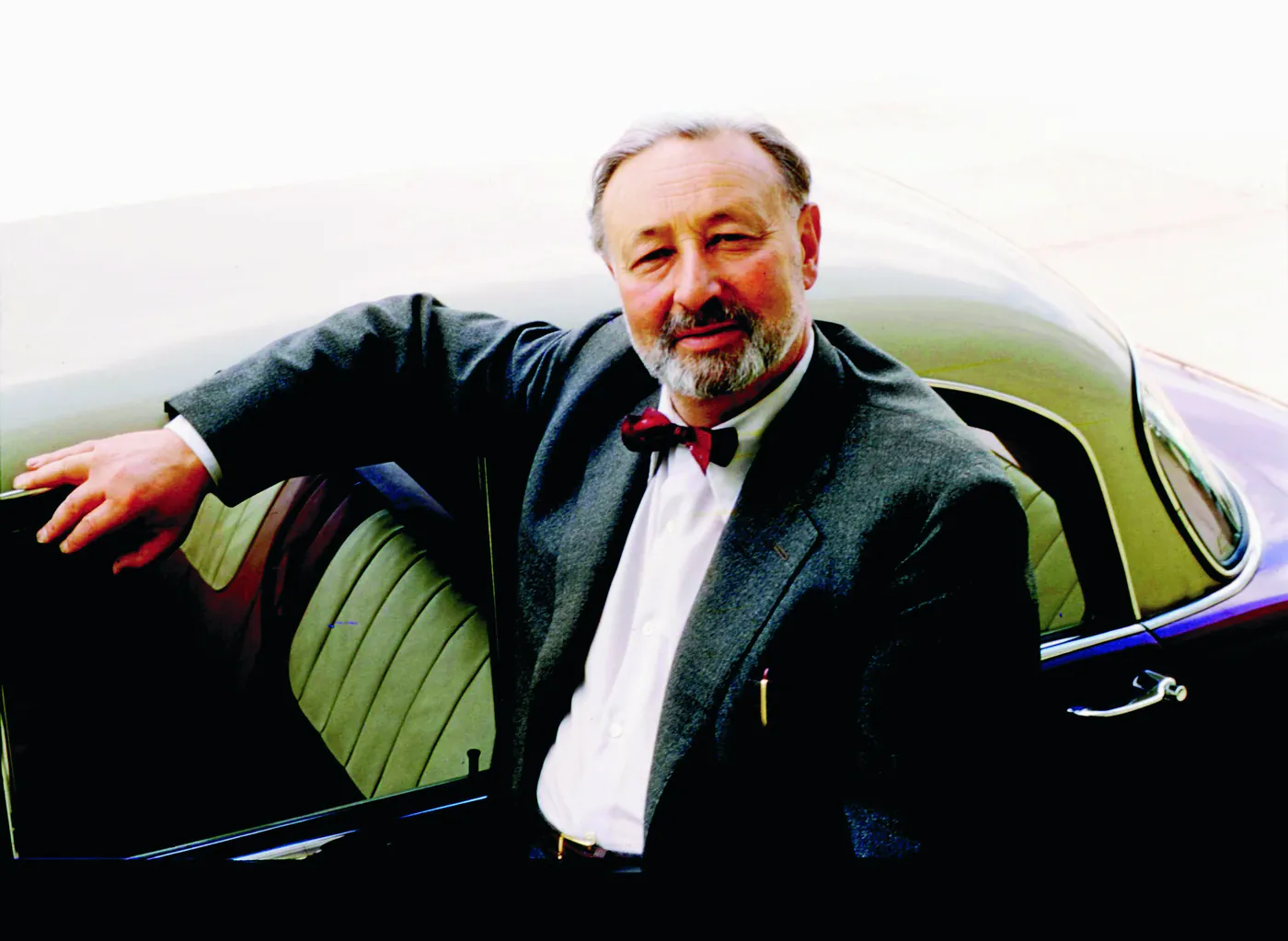
In 2004 the Dutch journalist Paul Schilperoord begins researching Ganz's life and work from the archive he left behind. His biography appears in Dutch in 2009 (revised edition 2014), in English and German in 2011, and later in Portuguese. The research continues to this day.
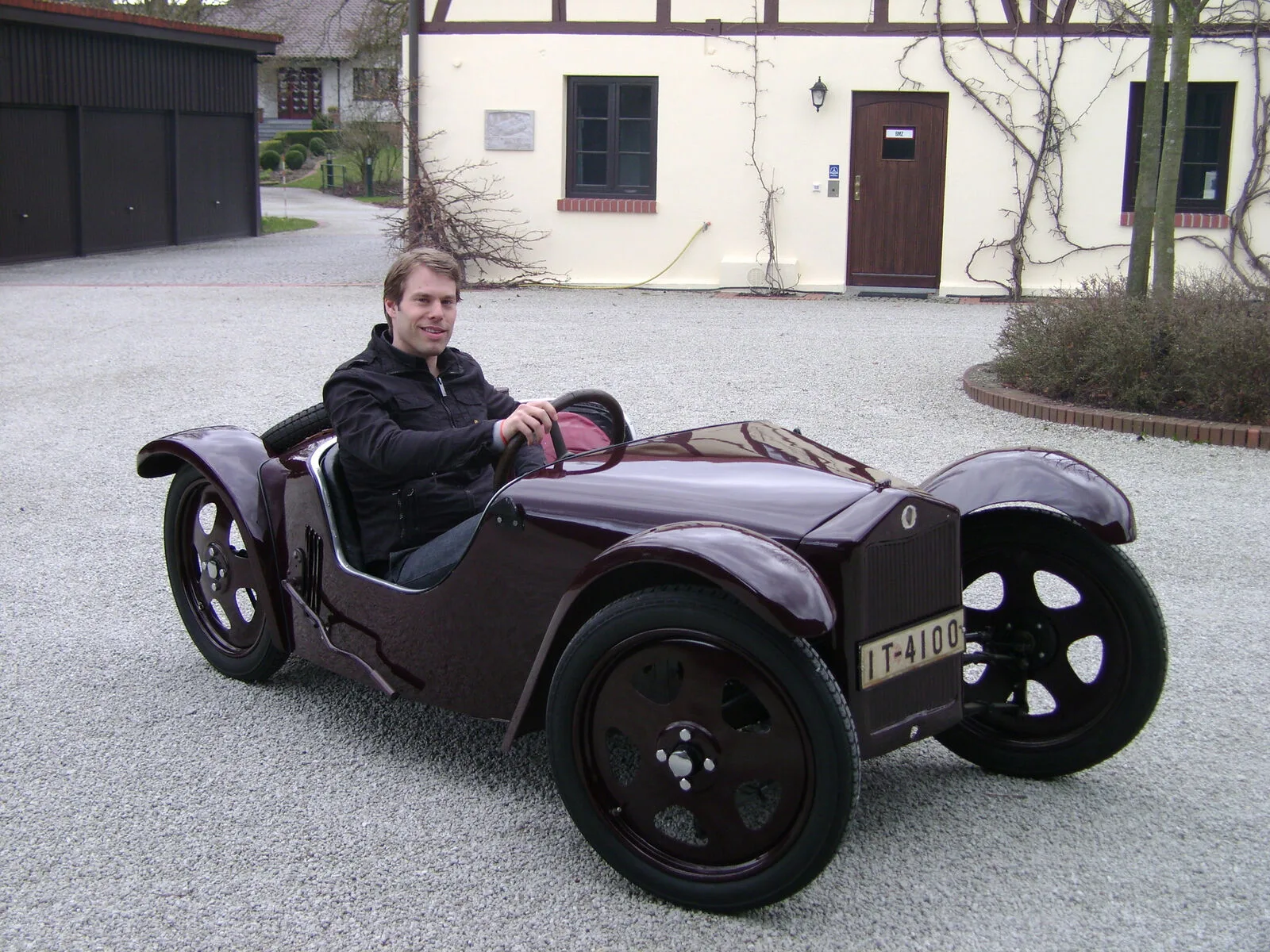
In 2005 a Tages-Anzeiger article on Schilperoord's research reaches the Ganz family. Lorenz Schmid, a descendant of Ganz's uncle Alfred, travels with his father to The Hague to meet Paul. From then on the two work together on the archive, the website and the events, to this day.
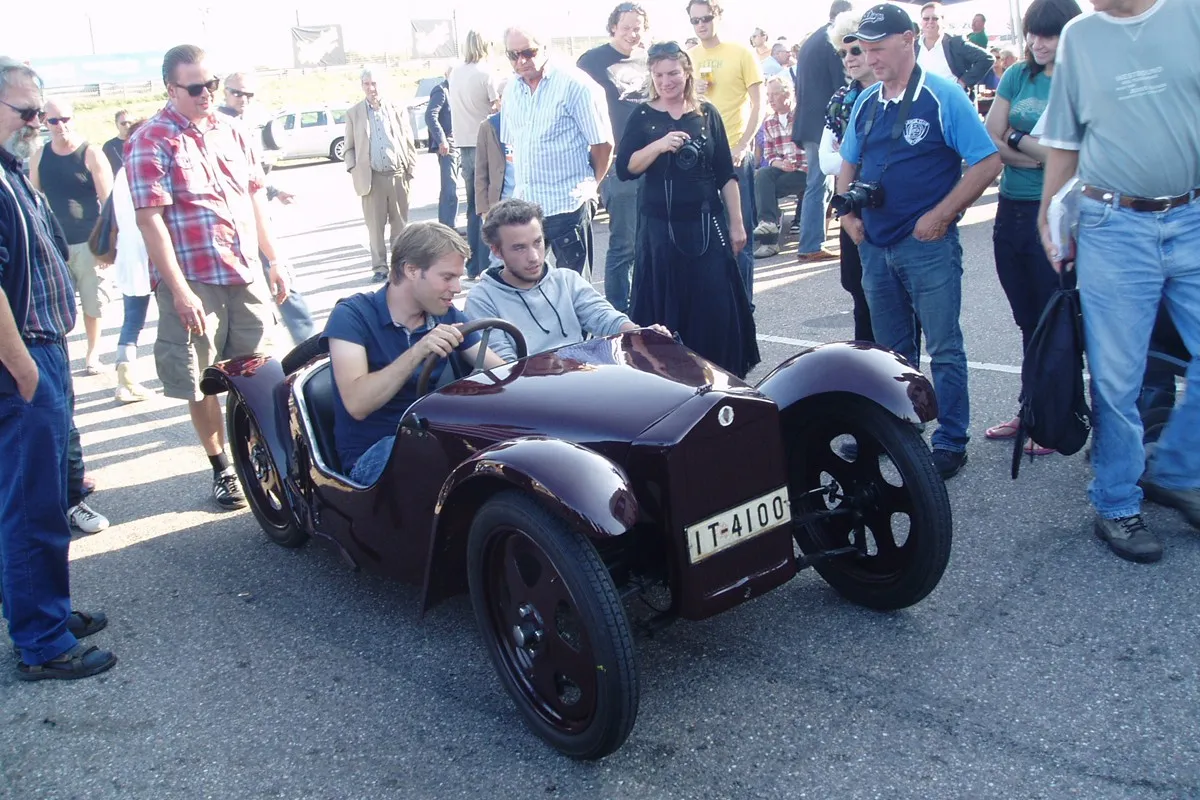
In 2009 the first book about Josef Ganz is published in the Netherlands. At the launch, Paul Schilperoord and Lorenz Schmid drive the original 1931 Maikäfer prototype on the Zandvoort racing circuit.
On 1 June 2014 Paul Schilperoord presents the updated Dutch edition of his book at the Louwman Museum in The Hague. The museum unveils the original 1931 Maikäfer prototype to the public, during a show of pre-1967 Beetles.
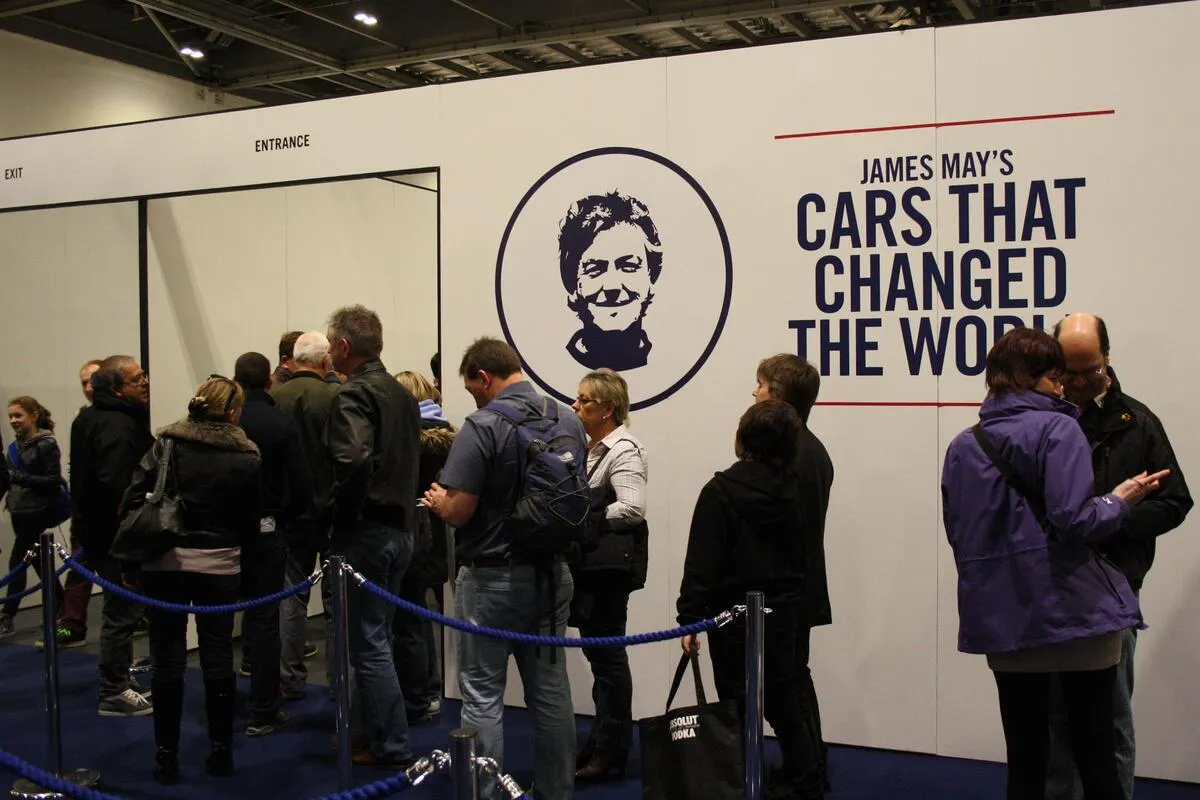
At the London Classic Car Show 2015, Top Gear presenter James May shows the original 1933 Standard Superior rolling chassis in his exhibition "Cars That Changed The World", one of only thirteen cars. May calls Ganz the respected Jewish engineer who came up with the basic layout and philosophy of the Beetle.
In the exhibition "Wolfsburg Unlimited. A City as World Laboratory" at the Kunstmuseum Wolfsburg, the artwork "Nudnik. Forgetting Josef Ganz" brings the forgotten engineer back to the city of the Volkswagen.
A crowdfunding campaign launched in 2017 finances the restoration of a 1933 Standard Superior Type 1. By September 2018 the car is 95 percent complete and is filmed for the documentary; on 28 April 2019 it is presented to the public at the film premiere in the Louwman Museum.
For the 50th anniversary of his death, the City of Port Phillip honours Ganz with a heritage plaque at Edgewater Towers, naming him among the notable residents of the building.
In February 2018 the Louwman Museum in The Hague, which owns an unrestored Rapid Swiss Volkswagen, honours Josef Ganz.
For the exhibition "Neuer Norden Zürich" the artist Rémy Markowitsch places "Josef Ganz im Silberfisch", based on a photograph from the archive, outside In der Hub 16 in Schwamendingen: Ganz's first address after moving to Switzerland in 1935. The house was destroyed in 1944 by accidental Allied bombing.
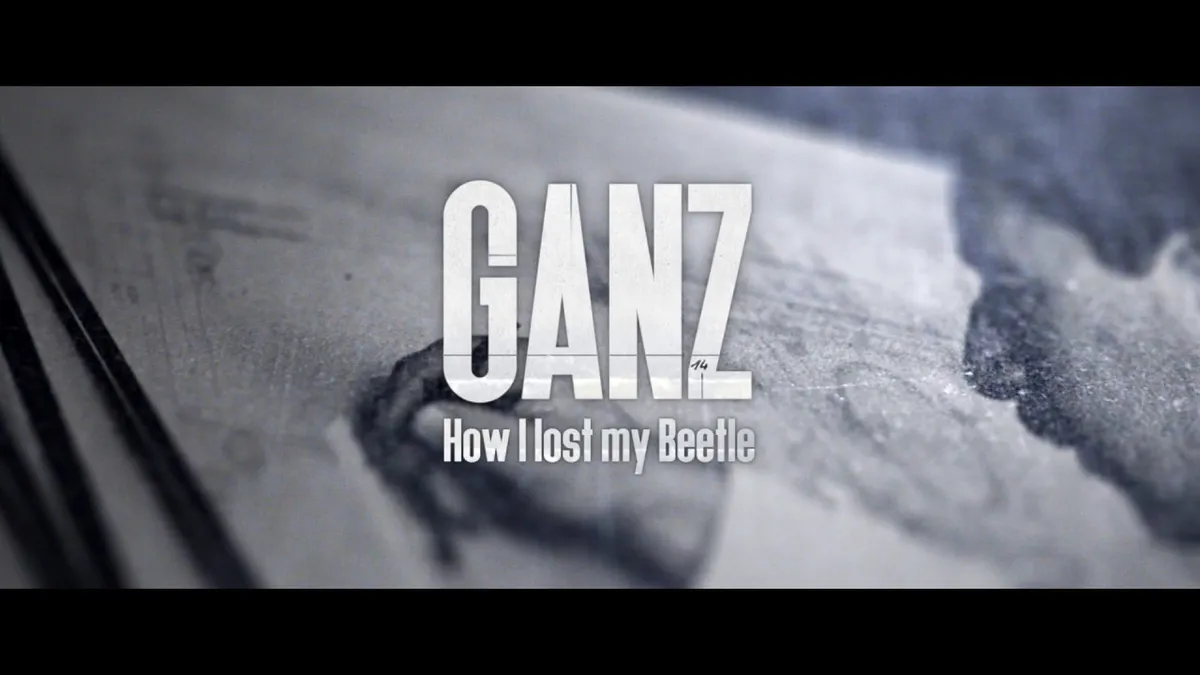
In April 2019 the Dutch documentary "Ganz: How I Lost My Beetle" is released. The film team had followed Paul Schilperoord's research, including the plaque ceremony in St Kilda.
In 2020 the 1933 Standard Superior Type 2 stands in a shop window in Geneva, at the concept store La Maison de l'Horlogerie: the city where Motosacoche built the three prototypes of the Swiss Volkswagen in 1937. Michel Borzykowski, co-author of the book "Objets transmissionnels" on families and the Shoah, photographs the car's owner with the object that connects him, through Josef Ganz, to that history.
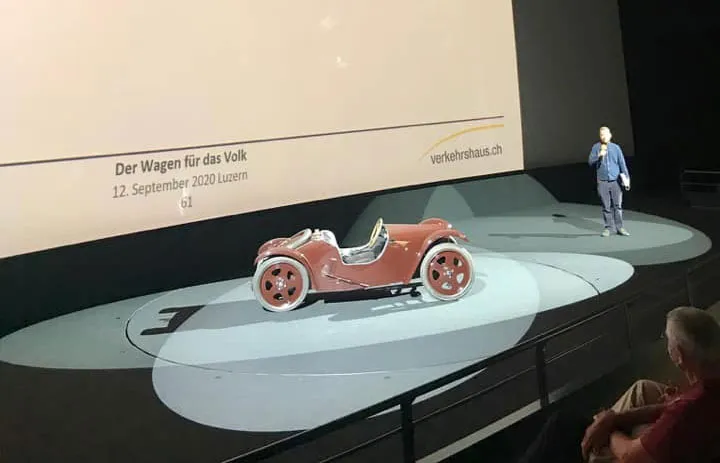
From June 2020 the 1933 Standard Superior Type 2 is on show at the Swiss Museum of Transport in Lucerne. On 10 September Swiss television's news magazine 10vor10 presents Josef Ganz as the unknown inventor of the Beetle, and two days later the documentary is screened at the museum, with the 1931 Maikäfer on stage.
From 17 June 2021 the UnterwegsTheater Heidelberg shows the documentary together with a dance performance in its series ArtOrt 021.
On 24 and 25 September 2021 the restored and registered Standard Superior Type 2 of 1933 drives from Kriens near Lucerne to the Bahnhofstrasse in Zurich. In front of Beyer Chronometrie, where Josef Ganz sat on the roof of his Superior in 1936, the photo is taken again: the same model, the same place, more than 80 years later.
In May 2022 the blues singer Philipp Fankhauser, the composer Sebastian Schwab and the conductor Wayne Marshall perform the "Ode to Josef Ganz" with the Bern Symphony Orchestra at the Casino Bern: a world premiere dedicated to the forgotten engineer.

Edmund Rumpler shows his streamlined "teardrop car" at the Berlin motor show: mid-mounted engine, swing axles, a drag coefficient that astonishes. The car inspires Ganz's first design of 1923.
In 1923 the German mark collapses; by November a US dollar costs more than four trillion marks. A car is out of reach for almost everyone, which is exactly the problem the young Ganz wants to solve.
Hans Ledwinka's Tatra 11 goes into production in Czechoslovakia with a backbone tube chassis and swing axles, the layout Ganz will champion in Motor-Kritik. Tatra later sues Volkswagen over its patents; in 1961 Ganz helps Volkswagen in that case.
The Wall Street crash of October 1929 sets off the world economic crisis. In Germany unemployment soars and car sales collapse; cheap, light cars become the question of the day.
On 30 January 1933 Adolf Hitler is appointed chancellor of Germany. Two weeks later he opens the Berlin motor show and calls for motorisation on the broadest level. For Ganz, a Jewish engineer and critic of the industry, the ground shifts within months.
In January 1934 Ferdinand Porsche submits his "Exposé concerning the construction of a German Volkswagen"; in March he meets Hitler at the Hotel Kaiserhof. In June 1934 the Reich association of the automotive industry commissions him to design a Volkswagen for 1,000 Reichsmark, the car Ganz had campaigned for since 1928.
On 15 September 1935 the Nuremberg Laws strip German Jews of their citizenship rights. Ganz, by then in Switzerland, loses his German citizenship in 1938.
On 12 March 1938 German troops march into Austria; the country where Ganz grew up and studied becomes part of the Reich. The same year Ganz loses his German citizenship and is stateless.
On 26 May 1938 the foundation stone of the Volkswagen factory is laid near Fallersleben. Hitler names the car "KdF-Wagen"; saving stamps are sold to hundreds of thousands of Germans, none of whom will receive a car before the war.
From September 1939 to May 1945 Europe is at war. Switzerland stays neutral but mobilises; refugees are tolerated, interned or turned away. The Volkswagen factory builds military vehicles instead of people's cars.
Under British control, series production of the Volkswagen Beetle begins in Wolfsburg at the end of 1945. In 1948 Heinrich Nordhoff takes over the factory; the millionth Beetle leaves the line on 5 August 1955.
Ferdinand Porsche dies in Stuttgart on 30 January 1951. Two books credit him alone with the whole Volkswagen concept; Béla Barényi sues their authors.
Adolf Rosenberger, the Jewish co-founder of the Porsche design office who had test-driven the Maikäfer in 1931, dies in Los Angeles in the same year as Ganz. He had been forced out of the company in 1935 and emigrated to the United States in 1938.
Places
Click a place to see what happened there, then fly to it.
Berlin · Contemporary history
Kopřivnice · Contemporary history
New York · Contemporary history
Stuttgart · Contemporary history
Nuremberg · Contemporary history
Vienna · Contemporary history
Fallersleben (Wolfsburg) · Contemporary history
Los Angeles · Contemporary history
Darmstadt · Studies and first designs
St. Niklausen near Lucerne
Nuremberg · Ganz builds his cars
Frankfurt am Main · Ganz builds his cars
Berlin
Dietikon · Switzerland
Marseille · Paris
New York · Australia and Holden
Canberra · Australia and Holden
The Hague · Forgotten and rediscovered
Bern · Forgotten and rediscovered
Zandvoort · Forgotten and rediscovered
London · Forgotten and rediscovered
Wolfsburg · Forgotten and rediscovered
St Kilda, Melbourne · Forgotten and rediscovered
Zurich · Forgotten and rediscovered
Heidelberg · Forgotten and rediscovered
Budapest · 1 chapter here
Vienna · 1 chapter here
Frankfurt am Main · 2 chapters here
Ludwigsburg · 1 chapter here
Zurich · 2 chapters here
Paris · 1 chapter here
St Kilda, Melbourne · 1 chapter here
·
· click or arrow keys · scroll on to continue · Esc leaves
timeline on the right: next event · Esc closes
 1 July 1898 – 1919 Overview 1 July 1898 Born in Budapest c. 1910 A first patent at twelve 1914–1918 In the German navy 1919–1927 Overview 1919–1927 Mechanical engineering 1923 The Ganz-Klein-Wagen 25 April 1924 "Seppl" at the Villa Solina
 1928–1934 Overview 1928 Editor-in-chief of Klein-Motor-Sport 1928–1933 The campaign for a German Volkswagen 1929 Patent for a central-tube chassis August 1932 An article by Béla Barényi 1930–1934 Overview June 1930 The Ardie-Ganz prototype 1931–1933 Consultant to Daimler-Benz and BMW May 1931 The Maikäfer October 1931 Visitors from the Porsche office February 1933 The Standard Superior September 1933 Standard Merkur and the 1934 Superior May 1933 – March 1934 Overview 1933 – March 1934 The industry contracts end May 1933 Arrested by the Gestapo June 1933 Forced out of Motor-Kritik December 1933 – May 1934 Tatra's patent complaint March 1934 Publication ban April 1934 – 1935 Overview 1934 Standard may no longer say Volkswagen June 1934 Leaving Germany 22 January 1935 Living in Switzerland 1935–1950 Overview 1935 Arrival and demonstration 1937 Three prototypes at Motosacoche October 1938 Six days across Switzerland 1939–1950 War, court battles and departure 1946–1947 The Rapid pre-series 1950–1951 Overview 1947–1949 The Julien MM5 and MM7 1949–1951 In the French car industry 11 August 1951 Departure from Marseille 1951 – 26 July 1967 Overview 1951 A new continent 1 August 1955 At General Motors-Holden 13 November 1958 – 1965 Recognition from Wolfsburg c. 1962–1967 Edgewater Towers, St Kilda 18 October 1965 The Order of Merit that never came 26 July 1967 Death in St Kilda
 27 July 1967 – today Overview 2004–today Paul Schilperoord's research and the biography 2005–today The family joins in 2009 The first book, and the Maikäfer at Zandvoort 1 June 2014 The Maikäfer unveiled at the Louwman Museum 8 January 2015 – 11 January 2015 James May: a car that changed the world April 2016 "Nudnik. Forgetting Josef Ganz" in Wolfsburg April 2017 – 28 April 2019 The Standard Superior Type 1 is restored 26 July 2017 A heritage plaque in St Kilda February 2018 Honoured at the Louwman Museum June 2018 "Josef Ganz im Silberfisch": art at his first Swiss address
 April 2019 The documentary: Ganz, How I Lost My Beetle c. June 2020 Back in Geneva 5 June 2020 – 12 September 2020 At the Swiss Museum of Transport, and on SRF 10vor10 17 June 2021 ArtOrt 021: film and dance in Heidelberg 24 September 2021 – 25 September 2021 The 1936 photo, re-enacted in Zurich May 2022 Ode to Josef Ganz: concert at the Casino Bern